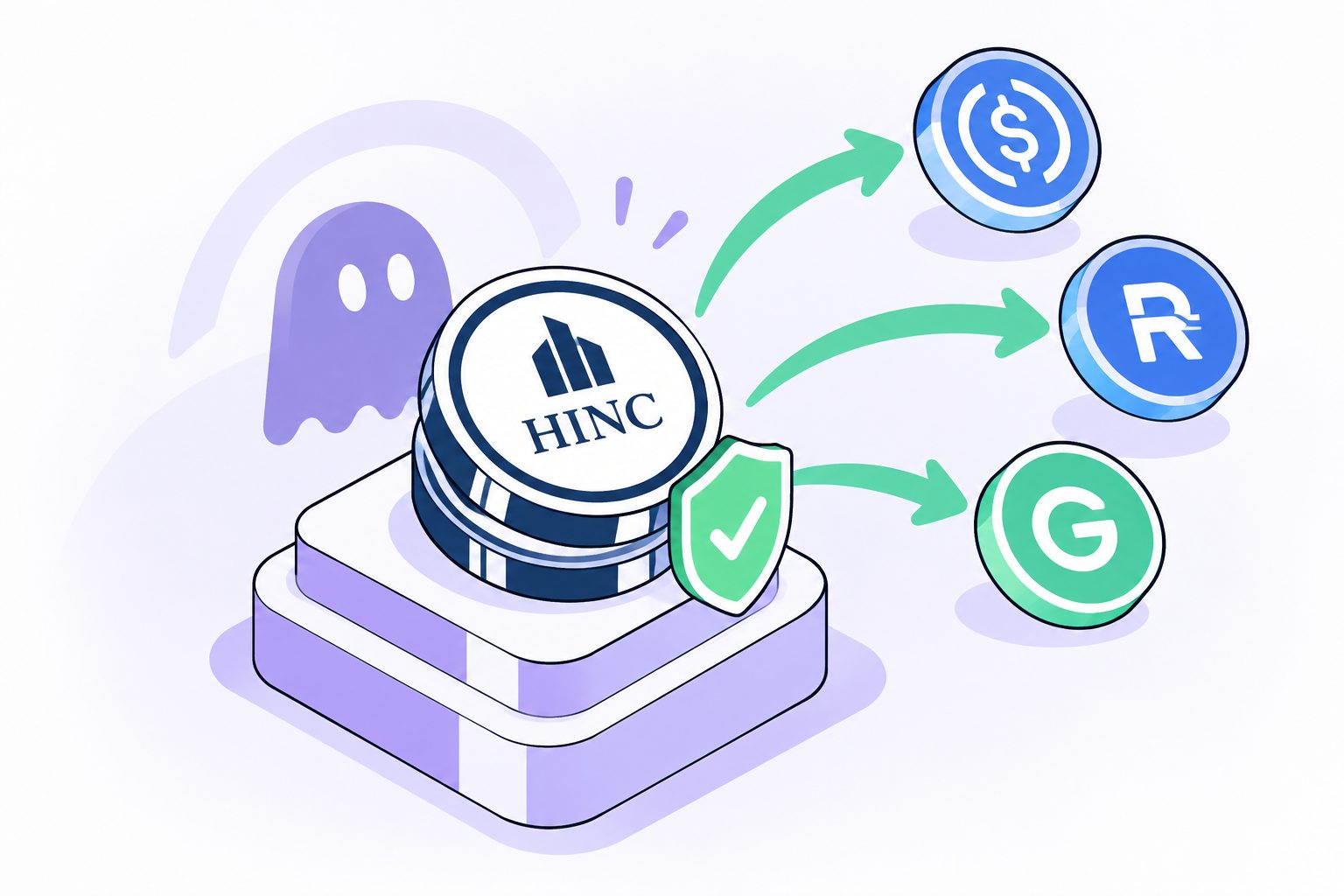
Aave Horizon now accepts HINC, a tokenized high-yield credit fund from Neuberger and Securitize, as collateral for borrowing USDC, RLUSD and GHO. The listing makes HINC the market’s first sub-investment-grade collateral and sets a 55% loan-to-value ratio, a 67% liquidation threshold and a cap of 10,000 tokens, or about $10 million.
Neuberger, which manages about $616 billion, launched HINC in August as its first tokenized fund. As of late August, the fund held roughly 87% high-yield corporate bonds, 8% BB-rated CLO tranches and the remainder in cash. LlamaRisk’s review found that 12% to 20% of the fund was rated CCC or below, depending on the rating agency.
By Tuesday morning, about 6,160 HINC tokens—roughly $6 million—had been supplied, or around 62% of the cap. The onchain oracle valued each token at $977.27, below its $1,000 issue price. The liquidation bonus is 8%. For comparison, tokenized Treasury bills on Horizon have an 88% LTV; borrowers using a dedicated GHO E-Mode can borrow at up to 57% LTV.
Only pre-approved HINC holders can liquidate positions, and they must then redeem through the fund. Redemptions target T+1 settlement but may take longer, and no instant-redemption buffer was available at launch. At maximum LTV, the collateral can fall about 17.9% before liquidation—less than the 18.25% one-month decline in the illustrative index blend cited in the proposal for March 2020.
Horizon borrowing had largely served as a liquidity strategy, with Treasury yields close to stablecoin borrowing rates. HINC introduces a potential carry trade and exposes the market to lower-rated credit. Permissionless USDC, RLUSD and GHO lenders indirectly fund that exposure but cannot themselves hold or liquidate HINC. The cap limits the risk for now; a credit selloff will test how liquidations restricted to approved holders perform.