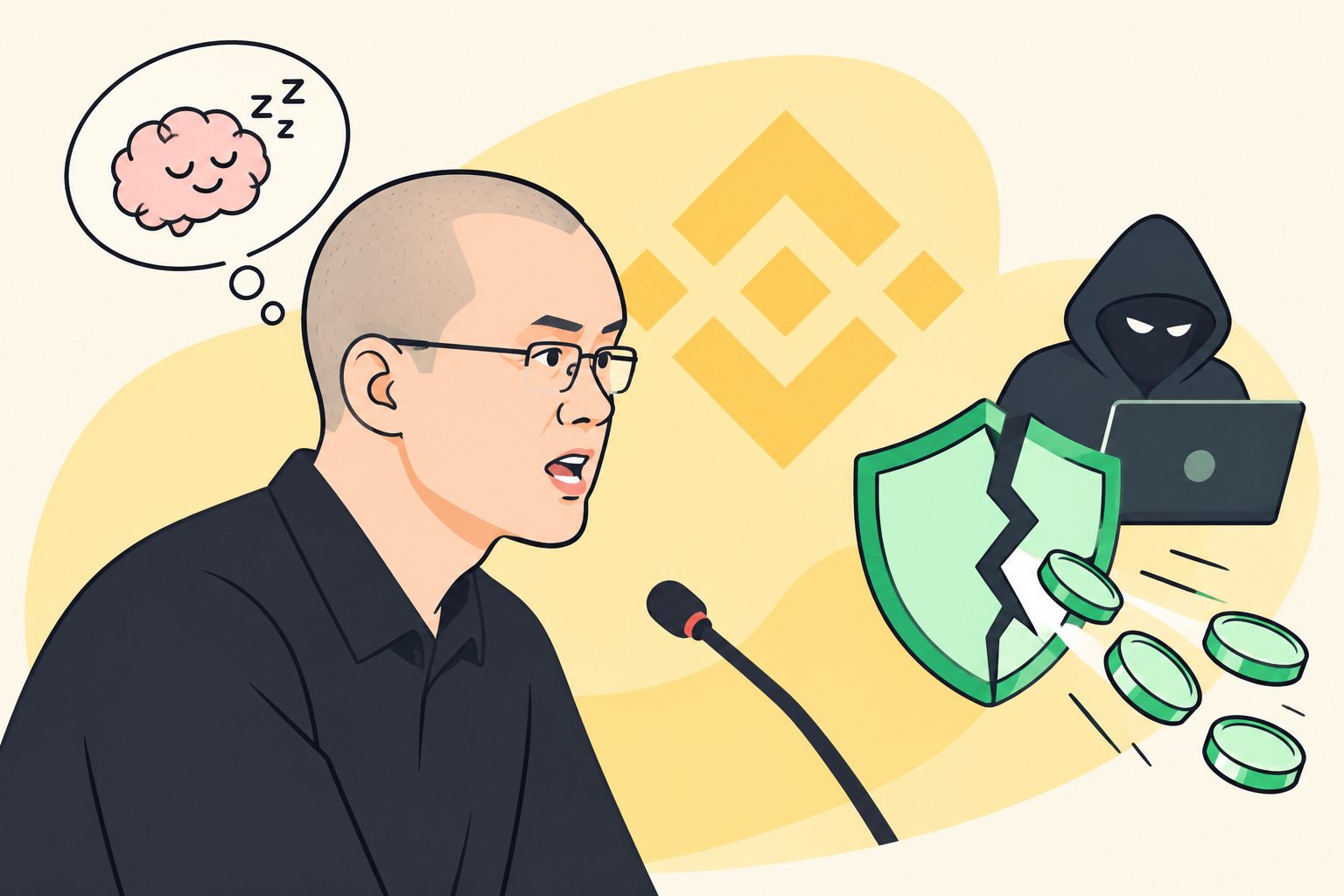
Speaking at Binance Blockchain Week in Bangkok on November 28, Zhao said crypto leaders had grown complacent about security. He proposed an industry alliance to coordinate with law enforcement, share practices and check one another’s defenses; no participating companies were named.
The October attack began on an engineer’s laptop months before funds were taken. Binance says about $2.85 billion was frozen or intercepted, while U.S. prosecutors have sought forfeiture of more than $1.1 billion in USDC.
“If I have to, I will drive it,” Zhao said of the proposed alliance.
Binance’s November 3 findings, citing an FBI alert, attributed the theft to North Korea; the Justice Department has also described the stolen funds as taken by North Korean actors. Binance says the intrusion involved multiple employees and reached its signing service through engineers’ devices and internal tools. The exchange rebuilt its wallet system in a new environment, replaced its AI tool and access controls, decommissioned affected engineers’ credentials and tightened device controls. It also reported detecting 57 suspected North Korea-linked cyber threat cases in 2026.
Binance says law enforcement, blockchain intelligence firms and industry partners helped freeze or intercept about $2.85 billion as of November 3. The Justice Department separately said U.S. efforts had helped freeze, seize or return almost $3 billion in cryptocurrency since the theft, without providing a breakdown. Circle briefly blocked access to the stolen USDC before November 6; prosecutors sought a temporary restraining order covering about $1 billion that day. A court granted it for 14 days through November 23, when prosecutors filed a civil forfeiture claim for more than $1.1 billion in USDC. Circle can freeze USDC, but assets including BTC, ETH, SOL and XRP have no issuer able to do so.
After withdrawals resumed, Binance recorded $4.65 billion in withdrawals and $1.01 billion in deposits between 06:00 and 15:30 UTC on November 1, a net outflow of about $3.64 billion in 9½ hours. On November 12, it said affected balances had been covered using parts of its SAFU fund, futures insurance fund and corporate treasury. Binance said on November 27 that it had fully lifted its withdrawal freeze.
Existing security efforts include SEAL 911, a free 24/7 incident-response hotline, and the Security Alliance’s open-source guidance on North Korean threats. Its certifications cover areas such as incident response, multisig operations and treasury security. Crypto ISAC, a threat-intelligence sharing group, lists Circle, Coinbase, Kraken and Gemini as members, along with Binance.US, but not Binance itself. Neither group describes sending one exchange’s engineers into another’s systems to verify controls.
Binance says it is also engaging independent cybersecurity firms. Zhao’s proposal faces concerns that peer reviews could expose sensitive systems or create targets, and would need to show what rival engineers could uncover beyond paid auditors. Potential review areas include unusual withdrawal approvals, code deployment paths to signing services and the security of engineers’ devices. Whether other exchanges join before the end of 2026, and whether members commit to fixing findings and publish review results, could test the proposal.