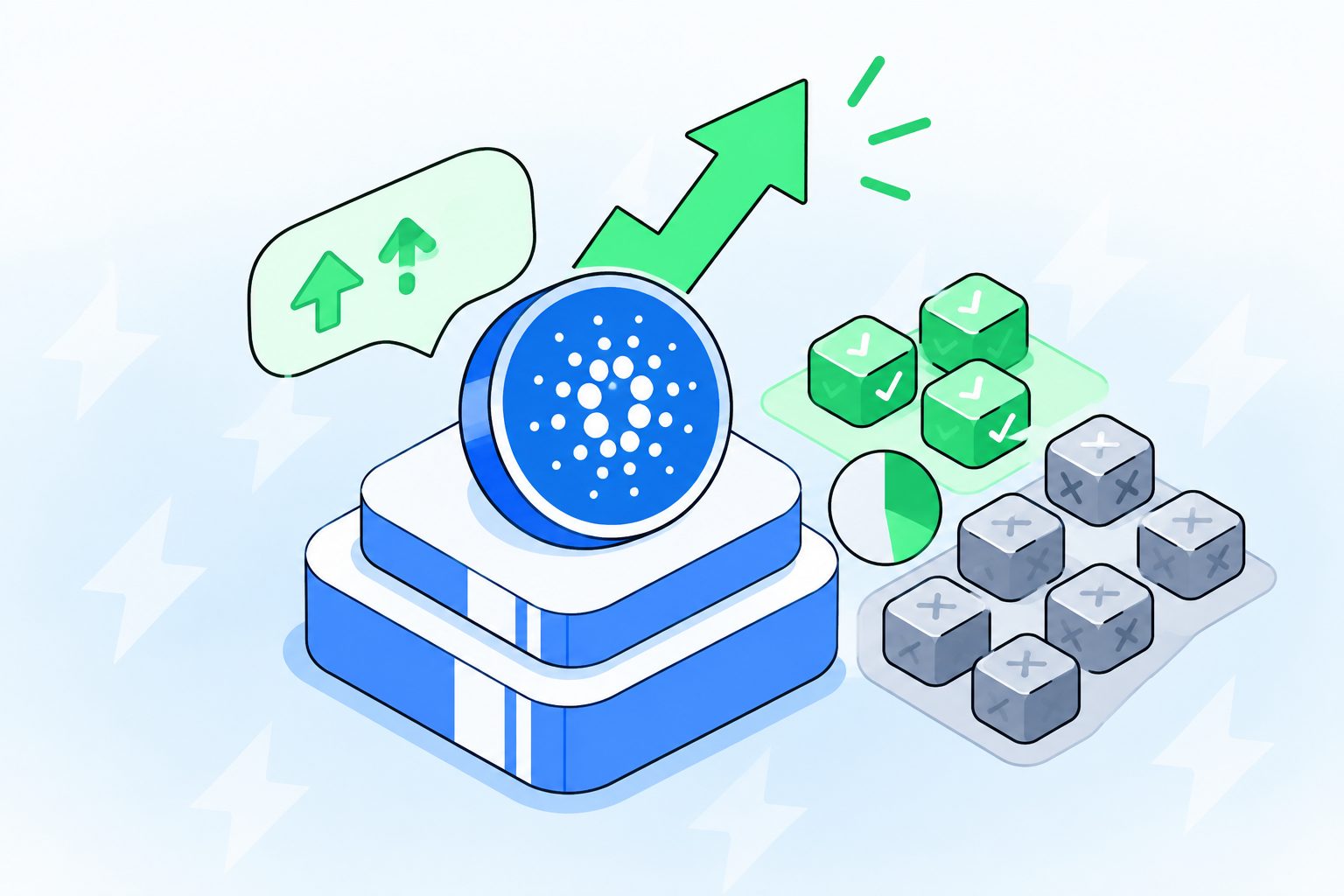
Cardano ranked second among Layer 1 networks by validator count in Token Terminal’s May 2026 comparison, with 2,823, and posted the fastest annual growth among the top 10 proof-of-stake networks. By November, however, only about 1,230 of nearly 2,880 registered stake pools were producing blocks.
Ethereum led the May comparison with approximately 895,200 validators. The other listed networks had around 1,600 for Algorand, 775 for Solana, 600 for Polkadot and 472 for Near. Token Terminal’s figures count total validators, so they are not directly comparable with Cardano’s roughly 1,230 active block producers.
Cardano stake-pool registrations were between 2,878 and 2,880 in November, according to Cardanoscan and Koios. Registration alone does not mean a pool is producing blocks; inactive pools contribute little to network resilience.
Five distinct node implementations were producing mainnet blocks as of Nov. 22, 2026, while staking participation stood at about 58%. These figures reflect different aspects of network activity and are not interchangeable with registered-pool totals.
Infrastructure providers Mintern and Everstake pointed to Cardano nearing 3,000 validators as a milestone for broader Web3 adoption. Developers are testing protocol version 12, but the upgrade has not launched on mainnet.