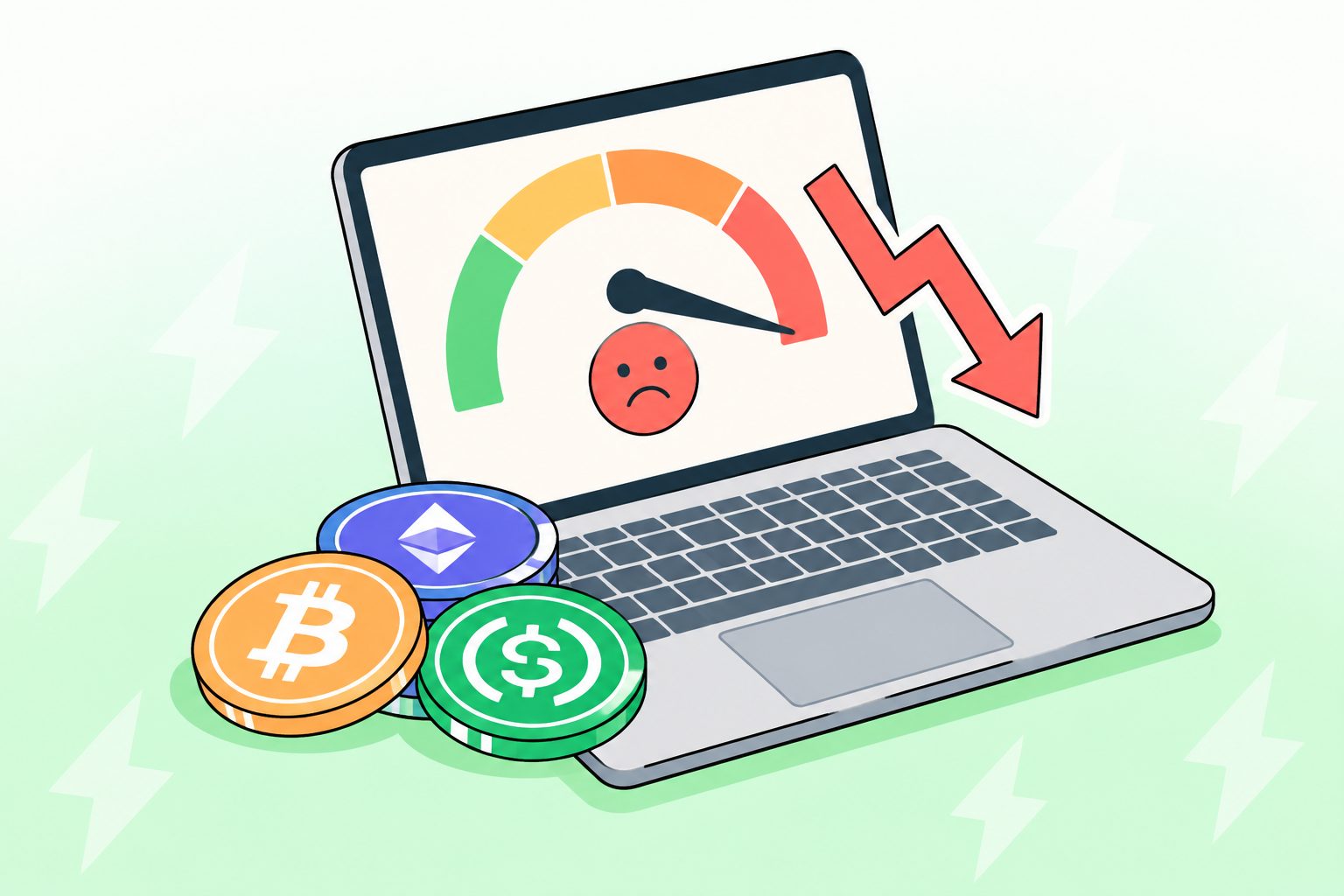
Bitwise’s Cryptoasset Sentiment Index fell to −1.88 standard deviations on Nov. 20, one of its three lowest readings since FTX collapsed in 2022. Yet realized Bitcoin losses remained below February’s capitulation peak. The data preceded Saturday’s slide to $55,130.
Only four of 15 sentiment indicators stayed above their short-term trends, and the Crypto Fear & Greed Index remained in extreme fear. Two futures measures improved: CME commercial traders cut their net short from 11.11% to 7.28% of open interest, which Bitwise interpreted as a sign that leveraged longs had been flushed out. More Bitcoin also moved onto exchanges, which the firm associates with possible selling, but it gave no inflow total.
Bitcoin fell about 10% over the week, roughly matching the Nasdaq Composite. The S&P 500 lost 8.6%, Nvidia 22.9% and TSMC 20.1%, its worst week since 2006. Gold fell 8.9% and silver 16%, while Ether dropped 14%. Bitwise’s Cross Asset Risk Appetite gauge declined from −0.51 to −1.11 after reaching −1.14 midweek, matching lows during the 2024 yen carry-trade unwind and early-2025 tariff selloff. The firm discounted a Binance hack as a cause because it had happened several weeks earlier.
The VIX closed at 35.89 on Nov. 20, its highest close of 2026, but below 38.57 in August 2024 and 52.33 in April 2025. Bitwise said equity traders paid more for protection without reaching those episodes’ panic levels, while crypto investors were near their most fearful readings since 2022. Options traders bought downside protection: the put-to-call ratio on crypto-native exchanges rose to 0.83, near the 99.9th percentile of its three-year range, and 25-delta skew was at or above the 99th percentile from one-week to six-month maturities.
Bitwise attributed pressure to rate expectations: futures priced a 93% chance of a December Fed hike and a 63% chance of two more hikes by January 2027. October meeting minutes showed almost all officials expected further tightening, and Governor Christopher Waller floated a 50-basis-point December move. Bitwise said the Fed was “approaching peak hawkishness.” Its measure of officials’ public comments had returned to 2021 levels; the 10-year Treasury yield was 4.95%, 29 basis points above the 2-year yield at 4.66%. The firm argued a large hike could invert the yield curve, a pattern historically followed by a pause and later cuts, but the Fed had not signaled a pause.
In the 14 days to Nov. 20, Bitcoin supply held at a profit fell from 59.1% to 43.2%, a level seen on only 99 of the previous 5,970 days. Bitwise estimated $953 billion in invested capital was at a loss, comparable with the FTX collapse. These measures value coins at the price they last moved on-chain, not by investor.
Bitcoin moved at a loss on Nov. 20 represented $1.36 billion in realized losses, a daily figure exceeded on only 18 earlier days. Realized profit fell to about 15 cents per dollar of realized loss. Weekly losses reached $5.3 billion, below roughly $5.7 billion in November 2025 and February’s $9.1 billion, which Bitwise ranked as the most severe episode. Since coins can move between wallets without being sold, these figures estimate rather than prove selling. The weekend low was Bitcoin’s weakest since September 2024 and below the late-June cycle low near $58,000; it then bounced to about $61,000, near the broad on-chain realized-price measure. Bitwise identified long-term holders’ cost basis as a further reference if that level breaks.
Perpetual-futures open interest fell about 4.5% to roughly 439,000 BTC; annualized funding dropped to 1.7% from 6.6% a week earlier, and the three-month basis narrowed to 4.5% from 5.2%. Combined liquidations were about $4.9 billion. Options open interest rose about 18.5% to roughly 548,100 BTC.
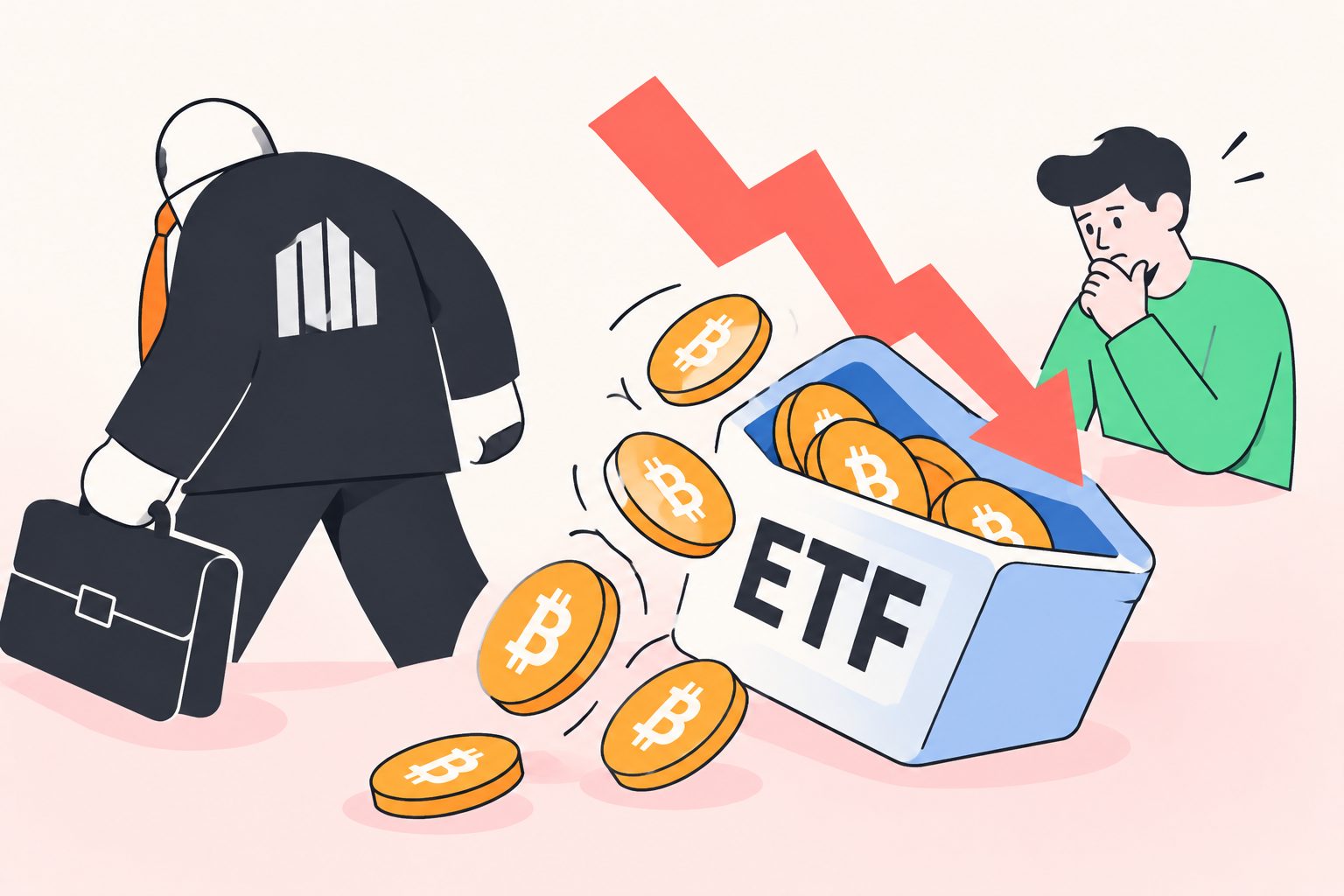
On Monday, the Nasdaq gained 6.5% while Bitcoin surrendered its intraday rally. Redemptions affected every major U.S. spot Bitcoin ETF in Bitwise’s data, with BlackRock’s IBIT accounting for about three-quarters of the total; U.S. spot Ether funds also saw outflows. Bitwise said such low sentiment readings had historically preceded strongly positive 12-month returns, but provided no hit rate or sample size. It pointed to ETF flows, renewed realized losses near Bitcoin’s realized price and the Fed’s December decision as tests for a potential turn.