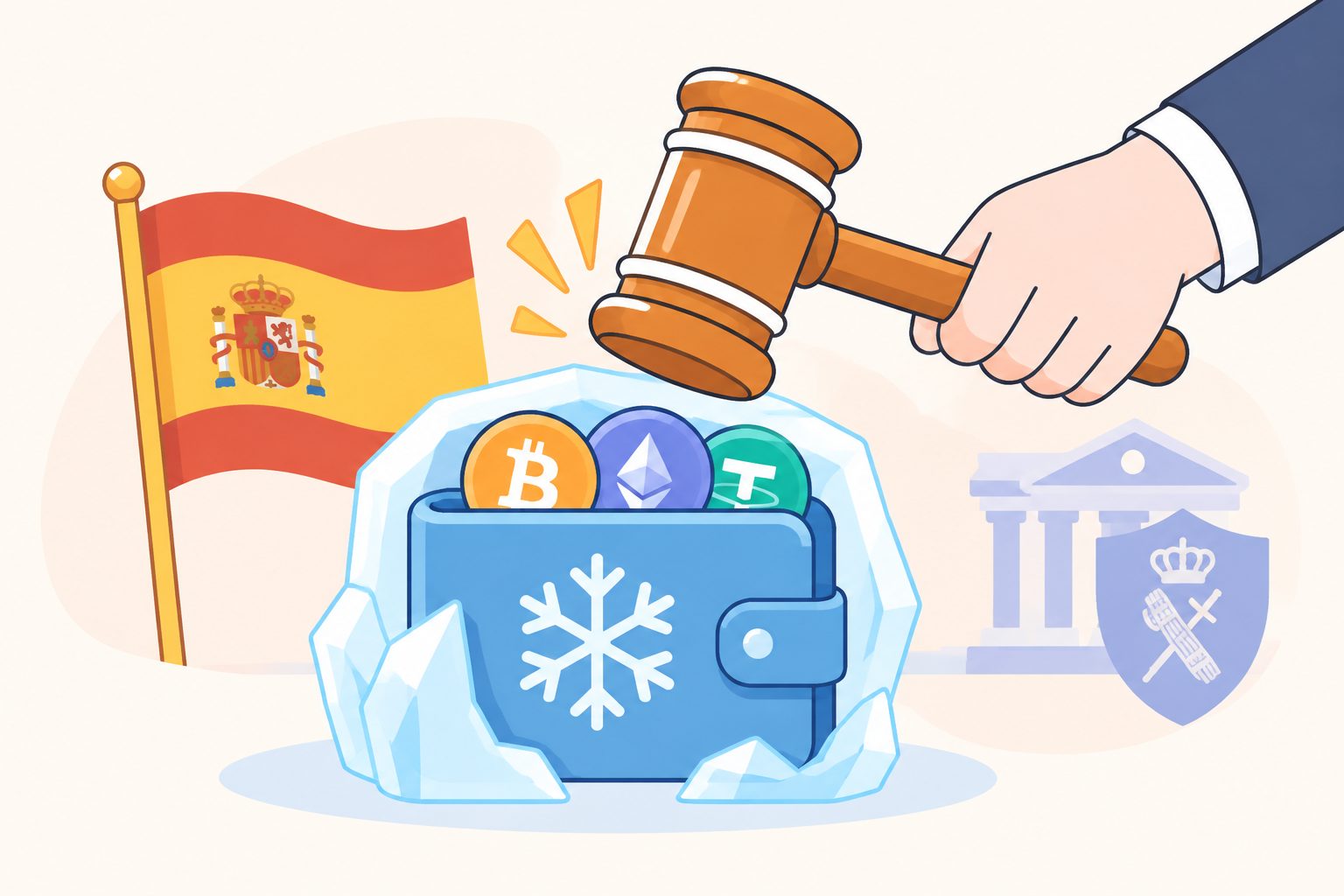
A royal decree-law gives Spain’s financial intelligence unit, Sepblac, authority to suspend crypto, bank and payment accounts or transactions it suspects are tied to money laundering or terrorist financing. The unit previously could suspend transactions only at the request of foreign counterparts.
Account suspensions can last up to five working days and transaction freezes up to 10 working days; a court must ratify or extend them after that.
Sepblac can act on its own analysis or at the request of Spanish police, to preserve funds while it examines a case. If a bank or other company files a suspicious activity report, Sepblac must order a suspension within three working days. It must lift a freeze sooner if it is no longer needed. The measure ends after the time limit unless the public prosecutor’s office asks a court to ratify or extend it. Companies that fail to comply commit an offense, while Sepblac and firms that follow orders are protected from liability.
The new authority was added to Spain’s 2010 anti-money laundering law through a broader decree that also caps consumer-loan interest rates and regulates buyers of bad loans. The government said the change aligns Spain with Financial Action Task Force standards and implements part of the EU’s sixth anti-money laundering directive. It cited the speed of online transfers, which can move potentially criminal funds before authorities complete their analysis.
Sepblac received 204 requests from other EU intelligence units to suspend transactions in 2025, up from 175 in 2024 and 90 in 2023. The amounts involved fell to about €32 million ($35 million) from €92 million ($101 million), while the number of bank accounts affected declined to 307 from 316. Suspicious activity reports from crypto service providers rose to 1,672 in 2025, from 972 in 2024. Sepblac said the filings continued to show weaknesses in how crypto firms identify transaction parties, and cited crypto’s pseudonymity and speed as vulnerabilities.
Spain’s next FATF evaluation includes an on-site visit scheduled for February 2027 and a plenary discussion in October 2027. The FATF has identified peer-to-peer stablecoin transfers as a major money-laundering risk and said centralized elements often remain in DeFi. Germany is also expanding enforcement powers, with lawmakers backing authority for customs officials to seize crypto and other assets of unclear origin. Spain’s decree takes effect two months after publication and must be ratified by the Congress of Deputies within 30 days.