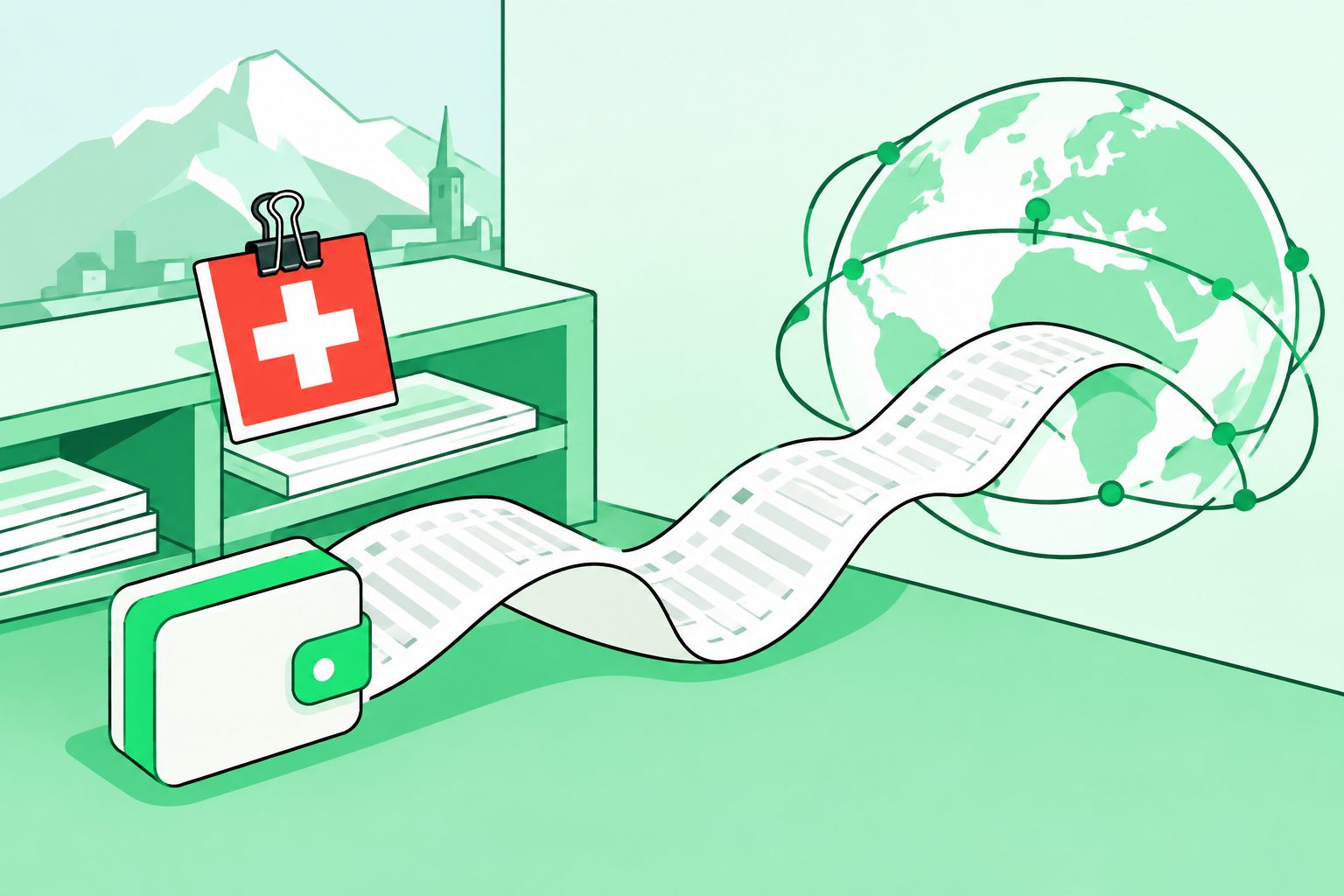
On Nov. 25, Switzerland’s Federal Council approved 57 potential partners for automatic exchanges of crypto tax information. Exchanges are planned to begin in 2028 with jurisdictions that opt in and meet OECD requirements.
The list includes all EU member states, the UK and several G20 jurisdictions. Switzerland’s legal framework took effect on Jan. 1, 2026, but the crypto provisions do not apply that year; Jan. 1, 2027 is the earliest implementation date. Providers have six months after each calendar year to file with Switzerland’s Federal Tax Administration, so 2027 data could be filed and exchanged in 2028.
Under the OECD’s Crypto-Asset Reporting Framework (CARF), a covered provider can report qualifying outbound transfers to destinations it does not know to be linked to a crypto service provider or financial institution. The annual report includes aggregate units and fair market value in fiat currency, by asset and customer, net of fees. A qualifying purchase may also be reported separately. Reports can include identifying details such as a customer’s name, address, tax residence, taxpayer identification number and, for individuals, date of birth.
Individual destination addresses are not part of the automatic report, but providers must retain addresses or equivalent identifiers for these transfers for at least five years so tax authorities can request them. Transfers to addresses known to be associated with a crypto provider or financial institution are outside this external-wallet field, though other reporting rules may apply. Later movements between private wallets without the provider’s involvement are not captured by that provider’s report; private keys, seed phrases and full self-custody balances are not required fields.
Swiss law requires providers to retain records supporting their compliance for ten years. The law does not specify how that period applies to individual wallet addresses. The scope is limited to reportable customers and qualifying transfers, and cross-border exchanges depend on partner activation and eligibility.