The committee formally reported the amended bill for consideration by the full House. It would require the Treasury to publish annual cryptographic attestations and reports on reserve Bitcoin holdings, transactions and control of private keys, with independent audits and oversight by the US Comptroller General.
Introduced in May by Republican Rep. Nick Begich, the bill would give statutory backing to the Strategic Bitcoin Reserve created by President Donald Trump’s March 2025 executive order. The committee approved it 28-21 on Sept. 16. Trump’s order required federal agencies to report their digital-asset holdings to the Treasury and the President’s Working Group on Digital Asset Markets, but did not require public disclosure.
Under the proposal, agencies would submit an internal inventory of Bitcoin and other digital assets they hold, have seized or control within 60 days of enactment and annually afterward. This inventory would cover more assets than the public report on Bitcoin formally deposited in the reserve. Treasury would choose an auditor with cryptographic-attestation expertise; the bill does not specify a verification method or require a public wallet list or live updates.
Eligible reserve Bitcoin must be federally owned and free of legal obligations to be used for other purposes. Some finally forfeited or civil-penalty Bitcoin could qualify, but custody alone would not establish ownership: forfeiture orders and court records would remain relevant to title and third-party claims. The bill would transfer title to qualifying Bitcoin to Treasury when it enters the reserve.
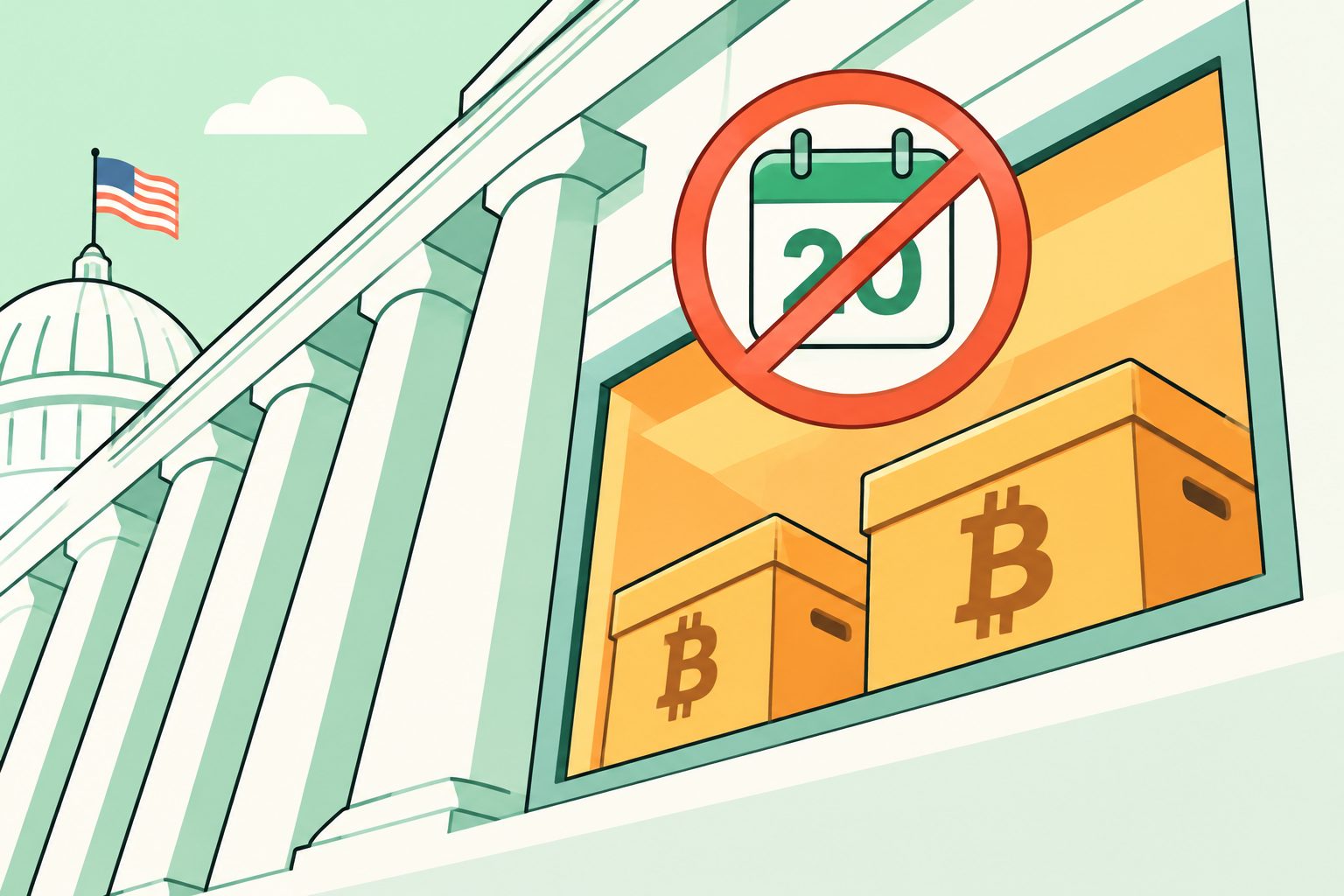
Treasury would have six months after enactment to establish the reserve and a separate stockpile for other digital assets, with agencies given another 30 days to transfer eligible holdings. Reserve Bitcoin would be subject to a 20-year lockup from enactment: Treasury could not sell it or pledge it as collateral. Two years before the lockup ends, Treasury would recommend whether to continue holding or gradually reduce the position; subsequent sales could reach 10% of reserve assets in any two-year period.
Treasury and Commerce would also study, over six months, ways to expand the reserve without adding to national debt or taxpayer costs. Options include exchanging other government-held cryptocurrencies for Bitcoin, additional forfeitures, and partnerships with states, private entities and international counterparts. Congress has until the 119th Congress ends in January to pass the measure; otherwise, it would need to be reintroduced, and the reserve would remain governed by executive action without the bill’s proposed public audit requirements.