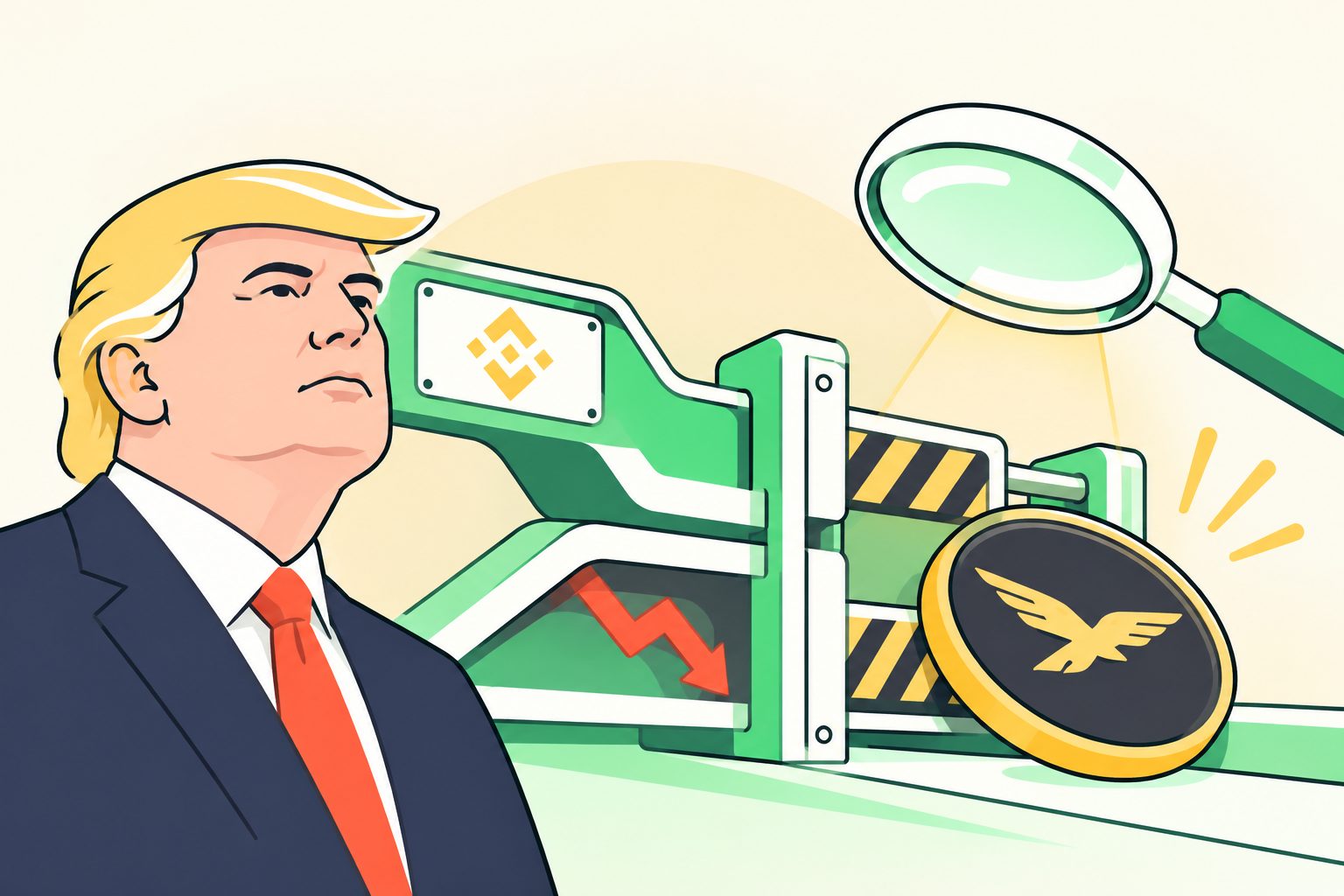
World Liberty Financial said it had “no involvement” in Binance’s automatic closures of WLFI perpetual futures positions during the token’s sharp decline. The project directed affected traders to Binance, which said it was reviewing market activity and execution data.
World Liberty’s first official statement since November 20 did not address the project’s reported $20 million ETH sale shortly before the crash. WLFI briefly fell as much as 60%, reaching an all-time low around $0.017 on some markets, according to the account.
The project said: “We are aware that overnight, Binance automatically closed WLFI perpetual futures positions on both the long and short sides. We have also seen reports from users whose positions were profitable prior to closure but resulted in losses upon settlement.” It added that Binance “independently operates and manages” its perpetual futures markets, including auto-deleveraging, and that WLFI “has no control over how these positions are managed, closed, or settled.”
Binance had restricted WLFIUSDT perpetual trading to reduce-only orders, and some users said auto-deleveraging affected their short positions. The exchange said it was “aware of reports regarding WLFI perpetual futures positions” and “actively reviewing the market activity and execution data.”
Justin Sun accused the project of “just another rerun of insider circular lending to cash out, unauthorized insider selling, the illegal freezing of investor assets, and investor fraud.” He called for “immediate delisting” and alleged team members were “mass-deleting social media and communications” to cover their tracks. Sun is in a legal dispute with World Liberty: he sued in April over WLFI tokens he says were frozen; the project denied wrongdoing and filed a defamation suit in Florida in May. In August, a federal judge rejected the project’s attempt to move his claims to private arbitration.