
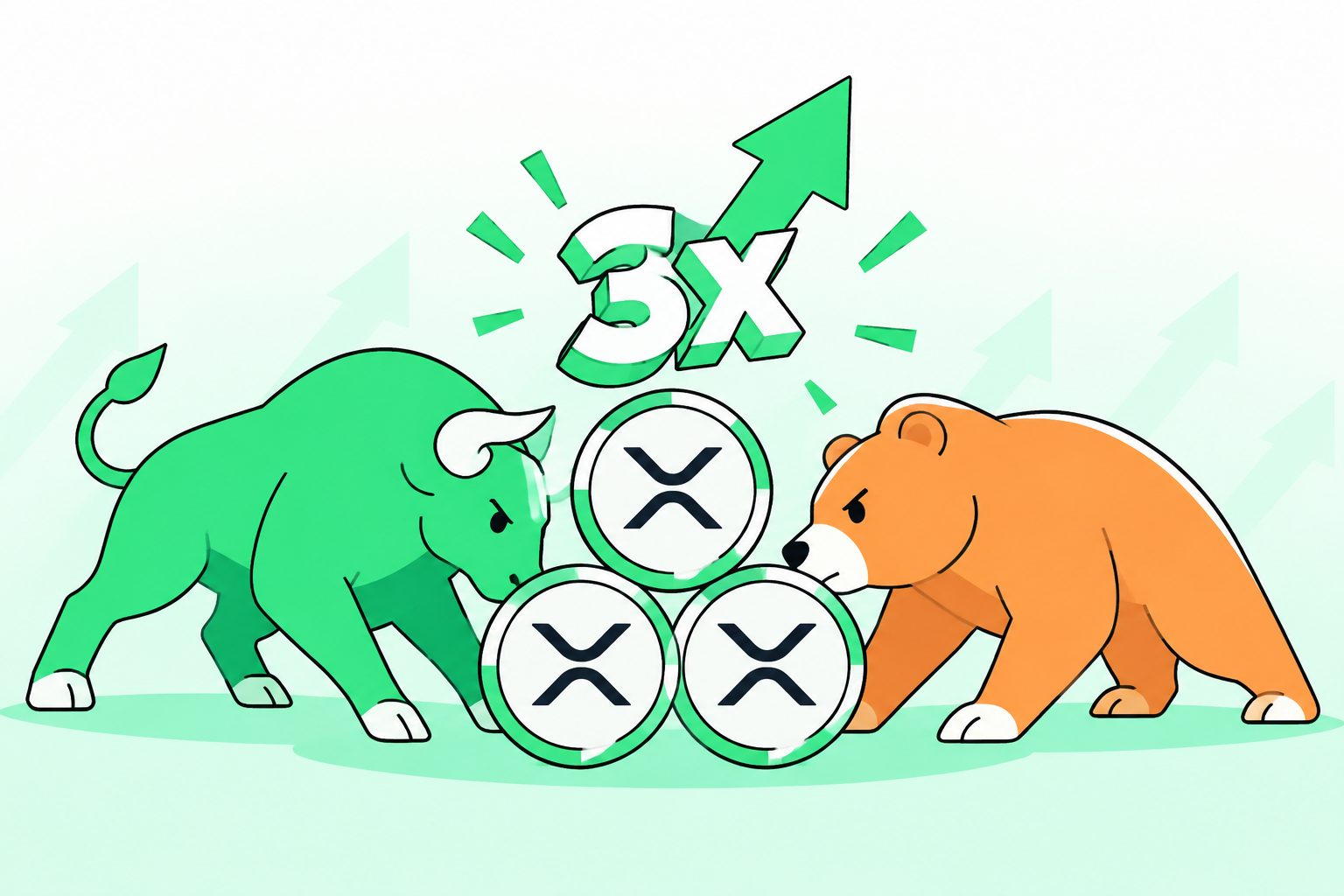
The bullish fund would target three times XRP’s daily return, while its bearish counterpart would seek three times the inverse. A 5% XRP move could therefore mean a targeted 15% gain for the fund aligned with that move—or an approximately 15% loss for the fund betting the wrong way, before fees and expenses.
Because the funds would rebalance daily, returns can erode even when XRP ends a multi-day period where it started. For example, if XRP rises from $2 to $2.20 on Monday, a bullish ETF would target a 30% gain, turning $100 into $130. If XRP then falls back to $2 on Tuesday, that requires a decline of about 9.09%; the ETF would target a loss of roughly 27.27% on the $130 position, leaving about $94.55. Holding XRP itself over the two days would break even. The bearish fund would also be affected by this compounding effect.
The filing covers eight leveraged or inverse ETFs tied to Bitcoin, Ethereum, Solana and XRP. After an amendment, their registration statements were scheduled to become effective Monday, with the next update set for November 30. The issuer has delayed the effective date repeatedly, and trading is not assured.