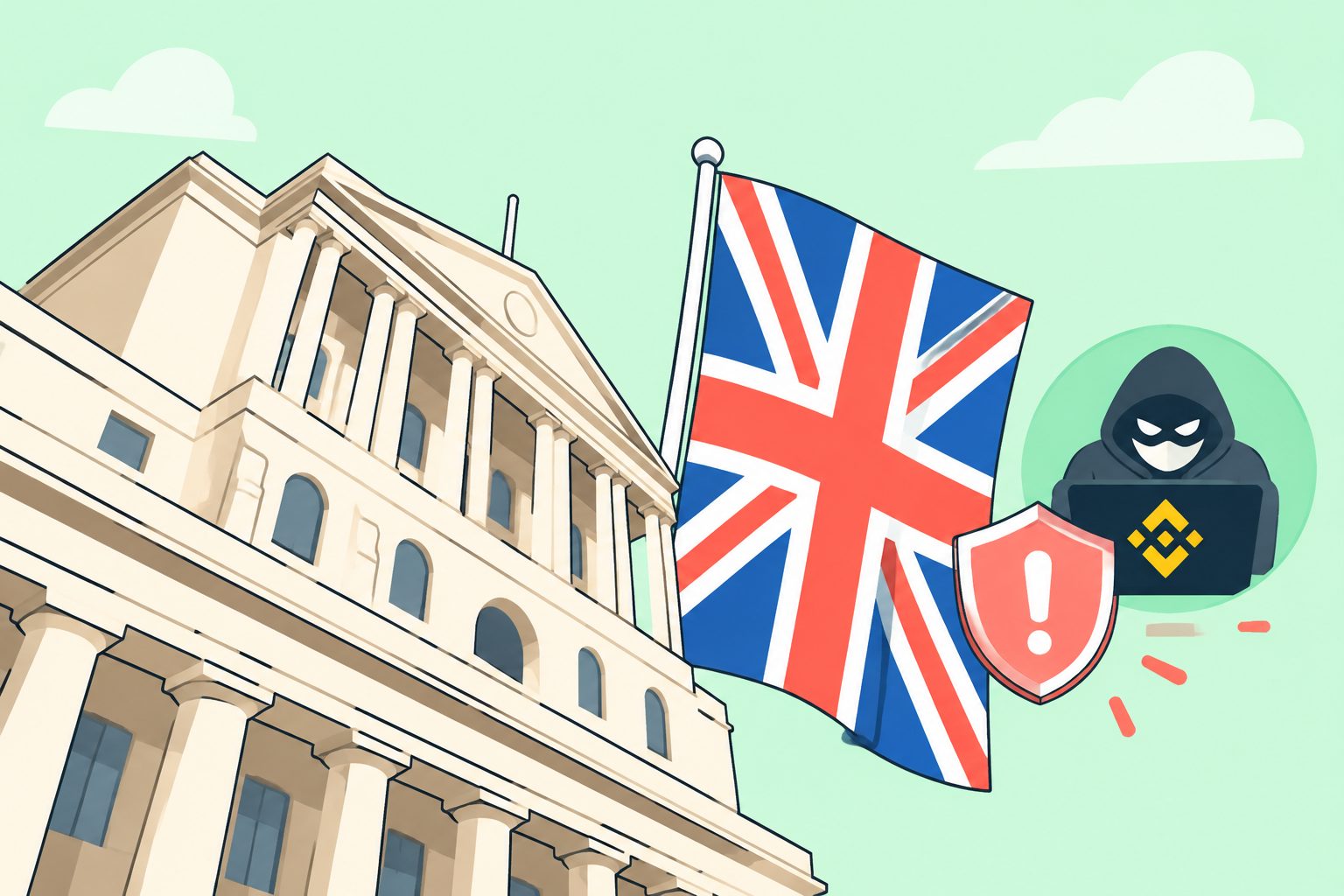
Attackers drained Binance hot wallets on Oct. 29 in a theft worth about $6.4 billion. Binance said it completed coverage of the loss on Nov. 12, and reopened initial withdrawals on Nov. 1. The Bank of England said crypto’s relatively weak connections to mainstream finance limited the broader impact.
Binance’s first update said it “will absorb the financial impact of these stolen funds, not our users,” and that more than $6.34 billion had been set aside, including $5 billion in the stolen tokens. Coverage reached about 95% by Nov. 1; Binance said it completed recovery using parts of its SAFU emergency fund, futures insurance fund and corporate treasury, without detailing the contribution from each. It committed to rebuilding SAFU to about $1 billion. Deposits remained open during the withdrawal pause. The Bank said social engineering and malware appeared to be involved; Binance initially cited a compromised laptop and said it had found no evidence of leaked private keys.
A wallet linked to the attacker deposited 60 million USDT on Aave V3 and borrowed 19,762 WETH, worth about $44.6 million at the time. Aave froze 292 reserves across V3 and V4 markets to prevent further borrowing against stolen assets. LlamaRisk later valued the position’s collateral at $59.9 million against $43.8 million in debt and reported no bad debt. The freezes restricted new deposits and borrowing, while withdrawals pushed utilization to 92%–100% in some pools. Aave stewards capped affected borrow rates at 10% APR and reduced borrowing limits, removing about $3.7 billion in unused V3 capacity. The Horizon market remained open because its permissioned collateral excluded the attacker.
The U.S. Justice Department filed a civil forfeiture complaint on Nov. 23 seeking more than $1.1 billion in USDC linked to the theft. Prosecutors attribute the attack to North Korean cyber actors and said authorities had helped freeze, seize or return more than $2.9 billion in crypto. The USDC had reached 36 addresses across 18 blockchains; Circle’s block was placed under a court order on Nov. 12, with Circle and Binance consenting. The funds remain blocked as the case proceeds. Circle reported $131.2 million in access-denied USDC addresses across its network at Sept. 30, before the hack; the Binance-linked amount alone exceeds that figure eightfold.
The Bank cited “weaknesses in firms’ operational controls” and limited interconnections with traditional finance as factors in the episode. Binance’s restoration of customer balances and reopening of USDC withdrawals helped avoid testing the redemption channel, which could have drawn on Circle’s bank deposits and reserve assets. Circle had $73.9 billion of USDC in circulation at Sept. 30, including $62.5 billion in its reserve fund. It calls Binance a strategic partner that “makes USDC extensively available across its full suite of products and services.” On Sept. 17, Binance also bought 1.2 million Circle shares for $100 million, but transfer restrictions of up to two years made them unavailable as a ready source of cash for replacement purchases.