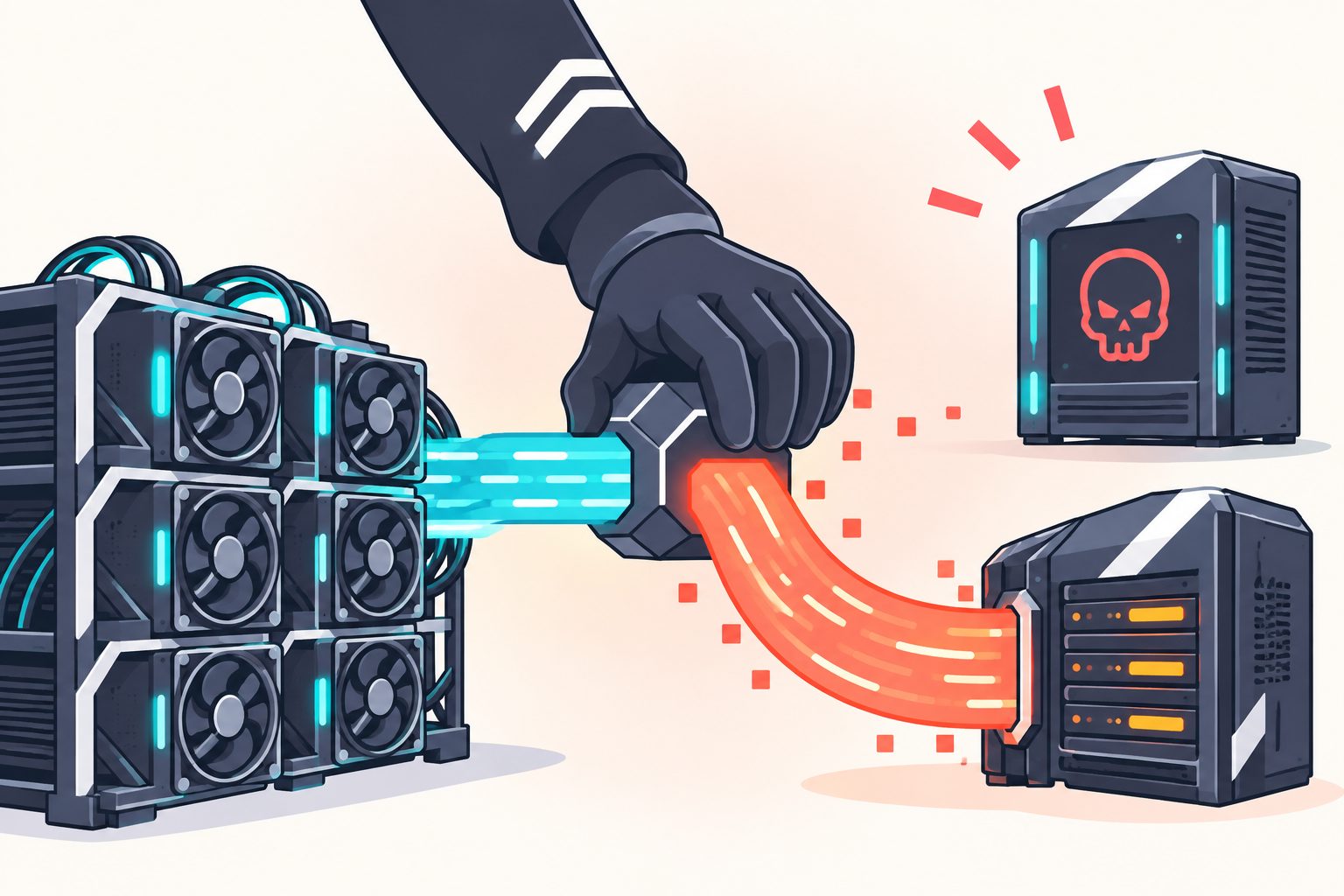
Four attacks on November 20 affected 1,050–1,600 mining sites each and diverted 0.6–1.9 EH/s for six to 49 minutes, Braiins said. Attackers used BGP hijacking to intercept connections and impersonate mining pools; miners reconnected to the same address, making the switch difficult to detect. Earlier incidents struck Latin America between November 7 and 12.
Braiins said the attacks exploited a weakness in Stratum V1, the protocol used to connect miners to pools. Stratum V2 contributor Pavlenex clarified: “This is an attack on MINERS and their infrastructure and is not a vulnerability in Braiins Pool.”
The exposed protocol dates to 2012. Braiins had warned about hashrate theft in 2020, arguing that preventing stolen revenue and lowering operating costs could provide a stronger reason to upgrade than decentralization alone. Braiins product marketing employee Turtlecute wrote: “For 14 years, we ignored SV1 issues.” Pavlenex also recalled earlier reports of interception attacks.
Braiins said miners’ equipment appeared to be working normally even as pool dashboards showed no credited hashrate. Seven mining organizations—including ANTPOOL, Foundry, F2Pool, SpiderPool, Block, MARA Foundation and DMND—had joined the Stratum V2 Working Group six months earlier. They reportedly represented about 75% of global hashrate at the time, but deployment remained uneven.
As of November 26, Braiins Pool and DMND were listed as production pools. The directory also showed solo pools and MARA Foundation’s industrial solo operation. Foundry was still marked as in progress despite reported testing that month; ANTPOOL, F2Pool and SpiderPool were not listed as production pools. Braiins said most major pools’ public endpoints still offered only unencrypted Stratum V1 when checked on November 23. CEO Eli Nagar urged: “Pools, Miners, fix your URLs today”.
Stratum V2 encrypts mining traffic and verifies pool identity, helping prevent impersonators from receiving miners’ work.