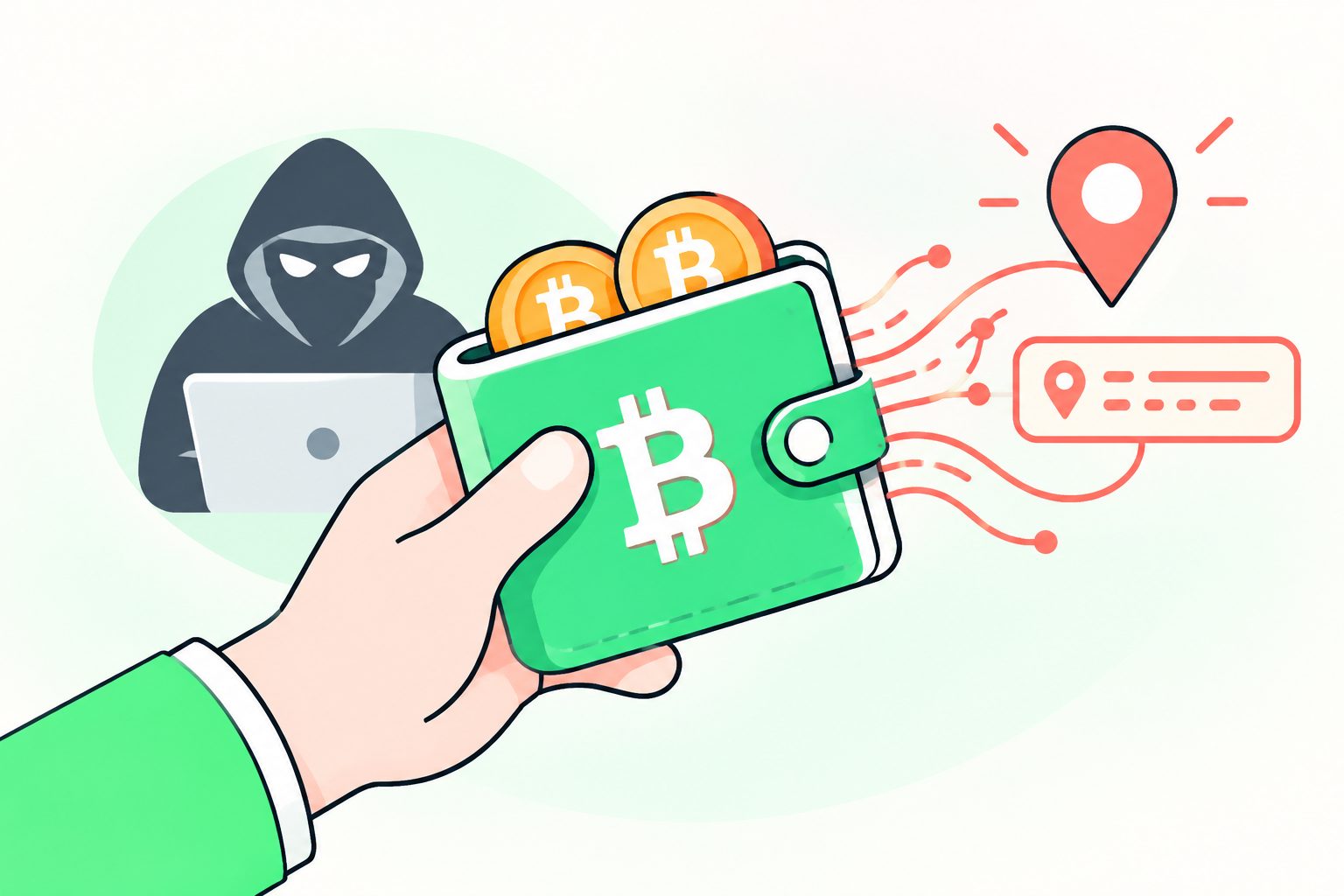
A Bitcoin Core rebroadcasting behavior may let an attacker associate a wallet address with the IP address of a node tracking it. The attacker sends a low-fee transaction worth as little as $0.18 to the target address, then watches for a node to rebroadcast it after it remains unconfirmed.
Contributor Abubakar Sadiq Ismail outlined the weakness on the Delving Bitcoin developer forum. Bitcoin addresses are pseudonymous, and the peer-to-peer network generally makes it difficult to connect an address to a particular computer. But Bitcoin Core may rebroadcast unconfirmed transactions after roughly 12 to 36 hours. A planted payment must meet the dust threshold while carrying a low enough fee to stay unconfirmed; the node that announces it again could reveal which machine has a wallet tracking the target address. Its IP can indicate an internet provider and approximate location, though this does not necessarily identify the wallet owner.
In a simulation involving five target wallets across six trials, Ismail identified the correct tracking node in all 30 attempts. Watch-only wallets may also be vulnerable, so avoiding address reuse alone may not be enough. Users can disable automatic wallet broadcasting with the -walletbroadcast=0 setting, but that also stops their own transactions from being broadcast automatically. Proposed Bitcoin Core changes intended to address the issue have not yet been released.