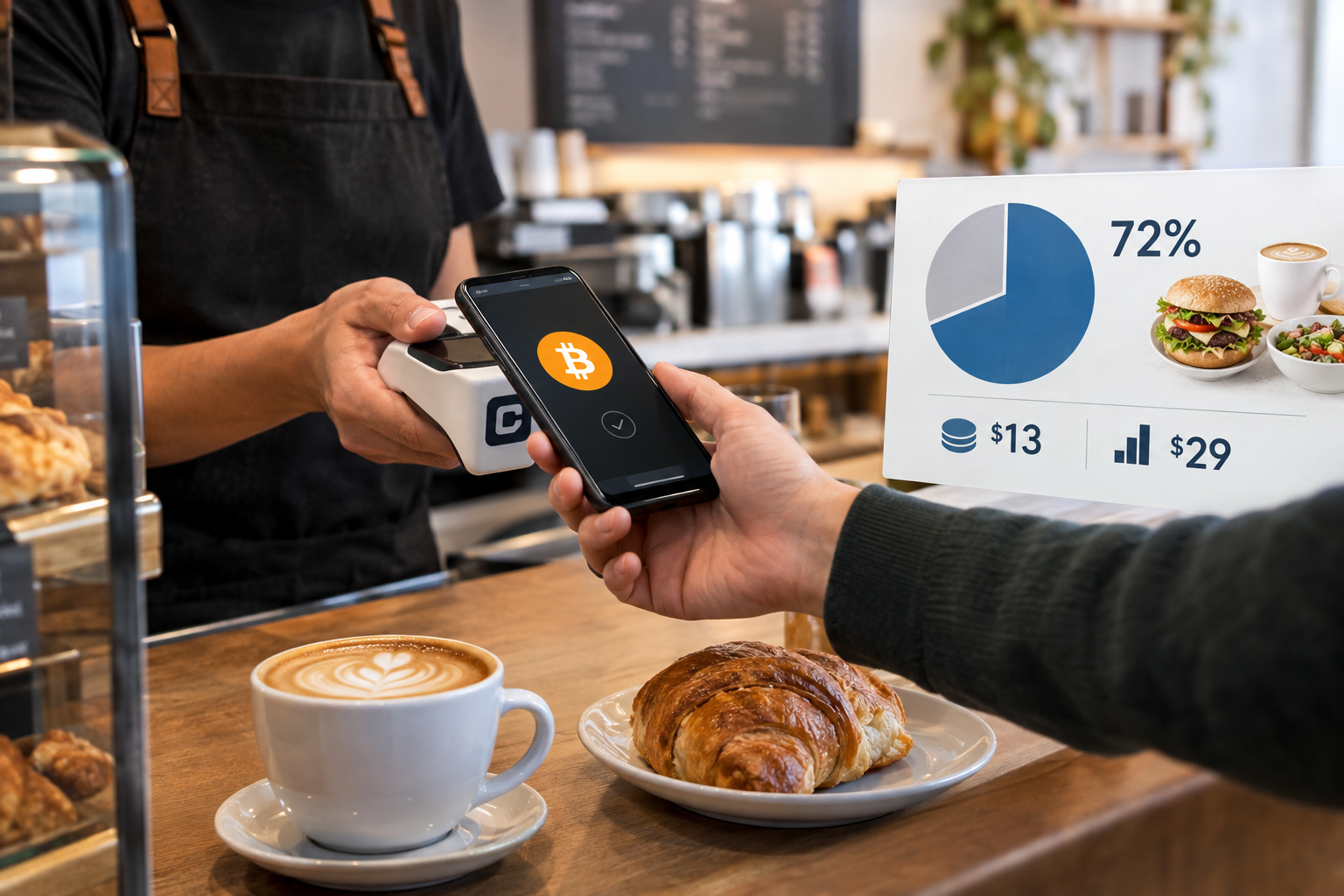
Block’s report on U.S. Square sellers found that bitcoin payments from Nov. 1, 2025, to Oct. 15, 2026, were typically small: the median was about $13, and the average about $29. Food and drink businesses accounted for 72% of payments.
Block presented the findings as evidence for Congress to consider a de minimis tax exemption for small crypto purchases. Under current federal rules, spending bitcoin generally requires calculating a capital gain or loss, even on a small purchase.
Coffee shops and fast-food businesses made up 62.6% of food-and-drink bitcoin payments, with a median ticket of $9.10. Grocery stores represented a smaller share but had the category’s highest average payment, $60.73. For comparison, food and drink accounted for 67.5% of all Square card payments in the period.
About 42% of bitcoin payments were below $10 and 65.1% were below $20. Together, those payments contributed only 19.1% of total payment value, as larger purchases generated much of the dollar volume. Among Cash App users paying the same merchant with bitcoin at least twice, the median was three purchases per customer-merchant pair. Repeat payments represented about 44% of Cash App bitcoin transactions, and 86% of those repeats happened within 30 days.
External Lightning wallets—including Strike, Wallet of Satoshi, Phoenix and Coinbase—accounted for 56.6% of Square bitcoin payments and about 66% of their value; Cash App wallets accounted for the balance. Sellers can choose what portion of a sale to retain in bitcoin, with Square automatically converting the rest to dollars. Block extended zero-fee bitcoin payment processing on Square through Dec. 31, 2027. Miami-Dade County is also testing bitcoin payments, accepting the cryptocurrency for property taxes and converting it to dollars.
Block said a Morning Consult survey it commissioned found tax and accounting complexity was cited by 23.6% of businesses that do not accept bitcoin, roughly matching the shares citing regulation, refunds or price volatility. Among businesses that had considered accepting bitcoin, but had not, 27% cited tax and accounting complexity. In an August survey of 8,669 U.S. adults aware of bitcoin, 29.6% of non-owners said they would be more likely to pay with it if doing so were easier; among that group, 15.7% said they were unsure about its tax or regulatory treatment.
The company said Congress is considering a crypto tax package and identified an exemption for small gains on qualifying purchases as one possible approach. Crypto industry groups have been lobbying for tax changes for months, with little progress so far. Block did not disclose the number of Square bitcoin payments, participating sellers or total payment volume, calling those figures proprietary. A list of 425 Los Angeles businesses that accept bitcoin offers one rough indication of adoption.
Block wrote on X Thursday: “Most bitcoin payments are small and routine,” describing the report as one of the first datasets on bitcoin spending in local economies. The company added: “We think tax policy should account for how people spend bitcoin as well as how they hold it,”