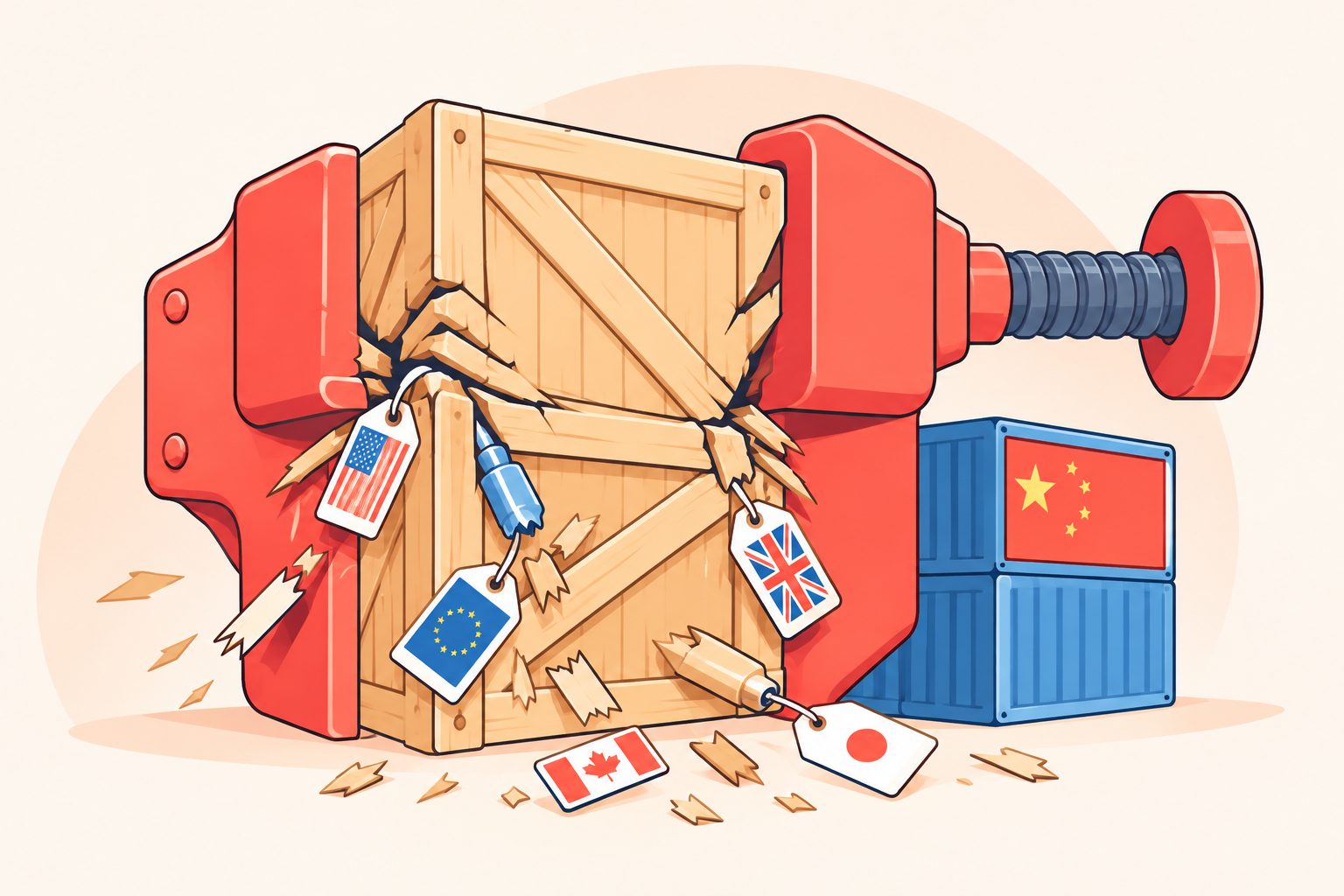
The Trump administration has proposed new tariffs on trading partners following a Section 301 investigation into industrial overcapacity. The latest update puts the plan at 16 partners; an earlier account said a senior U.S. official had notified 14 partners. The proposal includes China, India and the EU, and U.S. stocks lost $2 trillion at the open after its announcement.
The investigation covered 16 economies, and the administration says government subsidies often support the manufacturing surpluses it is targeting. The proposed rates vary by country and generally would not stack on existing duties, except for China. Mexico and Norway may avoid immediate tariffs.
China’s foreign ministry rejected the rationale on November 25, saying: “The so-called ‘overcapacity’ does not really exist.” China would face an extra 20% tariff on top of the 25% duty imposed in 2018 over forced technology transfers. The additional rate could rise to 40% if China fails to meet commitments under the trade truce reached in Busan, South Korea, in October 2025; that deal lowered tariffs on Chinese exports to the U.S. to 47%.
The proposal follows the Supreme Court’s February 2026 decision striking down Trump’s tariffs under the International Emergency Economic Powers Act. Trump then imposed a 10% global tariff under Section 122 of the Trade Act, before replacing it with Section 301 duties of up to 12.5% across 60 economies, citing alleged forced-labor practices. His “Liberation Day” tariffs were announced in April 2025 and paused after a negative bond-market reaction.