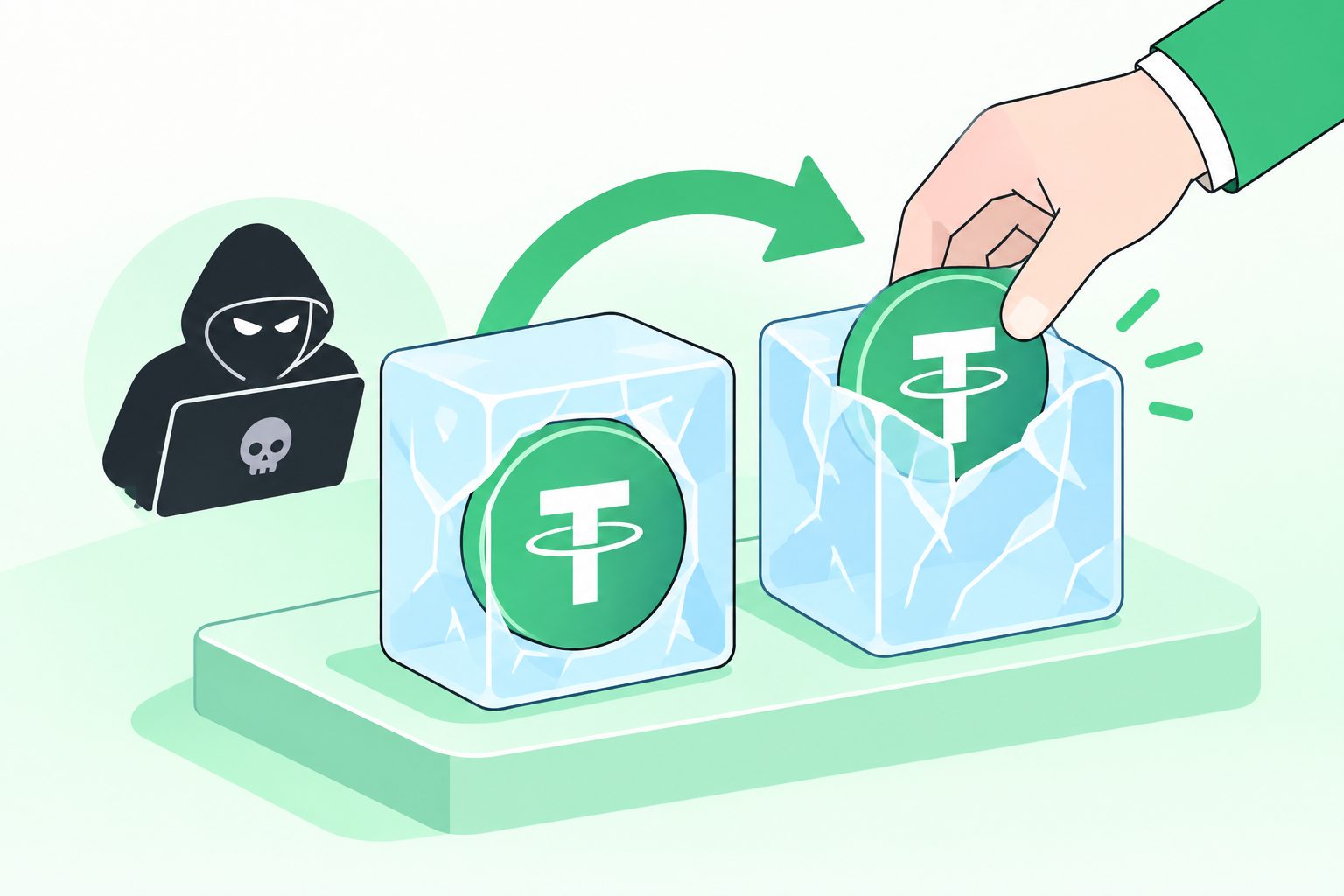
Tether has sought fees of up to 20% to return frozen USDT to some hack victims, Bloomberg reported November 24. Singapore-based exchange Bittok, which lost $50 million in a June 2020 hack, has yet to recover its frozen tokens more than five years later. Emails reviewed by Bloomberg show a Tether lawyer discussed the fee with the entity that acquired Bittok.
People involved in other recoveries said frozen USDT was returned in instalments under similar arrangements. It is unclear whether anyone paid the full 20% or how many victims were quoted that rate.
A Tether spokesperson said the company has reissued $1.2 billion in USDT and that fees cover recovery expenses, including legal costs. CEO Paolo Ardoino said Tether releases funds in stages in civil cases to manage legal risk amid unclear legal guidance. Tether is also establishing direct emergency communication channels with major exchanges.
Tether’s published policy for accidental transfers caps fees at 10% of recovered funds or $1,000, whichever is higher, but it sets no fee or timeline for hack recoveries. The company said it froze more than $1.5 billion in USDT within 30 minutes of the October 29 Binance attack, and that cooperation with law enforcement helped freeze more than $4.9 billion in assets by September 28.
Circle has taken a court-led approach to about $1.1 billion in USDC frozen in connection with the Binance hack. The Justice Department filed a civil forfeiture complaint on November 23 seeking the funds across 36 addresses on 18 blockchains. A temporary restraining order has covered the assets since November 12, with Binance and Circle consenting to it and its extension. Circle said in the complaint that it would issue equivalent “Substitute USDC” to the government if a court orders forfeiture. Binance said some issuers and exchanges require court orders before releasing frozen assets.
Circle’s policy also featured in the $285 million Drift Protocol exploit in April: attackers moved about $232 million in USDC across chains through Circle’s bridge over eight hours, while Circle waited for a court order. More than 100 Drift investors are suing Circle, which has asked a judge to dismiss the case. Circle changed its policy wording in May to say a government agency’s legal directive may be sufficient to block assets; plaintiffs argue its response to the Binance hack shows it could have acted sooner. Tether committed up to $127.5 million toward Drift’s relaunch.
The Abu Dhabi Global Market Courts issued a $6.5 billion worldwide freezing order against unidentified attackers and a separate order requiring 18 companies, including Circle and World Liberty Financial, to keep stolen tokens frozen. A hearing on December 1 will consider whether the injunction continues. None of the 18 firms is accused of wrongdoing. Tether is not covered by the order and is working with Binance directly on returning its frozen assets. The Justice Department said more than $2.7 billion had been frozen by November 12; a summary of its latest release put the amount frozen, seized or returned above $2.9 billion by November 23.
Tether says it froze $344 million in USDT on Tron in coordination with US authorities in an earlier case. The competing recovery approaches leave questions over who ultimately receives frozen funds: Binance has said it already replaced customer assets, and any recovery would go to Binance as the victim only if the government or a court directs it. The Justice Department has not publicly detailed how forfeited assets would be returned.
USDT and USDC together account for 86% of the stablecoin market, making issuer decisions central to what victims may recover. Upcoming issues include the December 1 ADGM hearing, a D.C. court forfeiture decision and Circle’s motion to dismiss the Drift case, as well as whether Tether discloses a reissuance schedule or how many victims faced the higher fee.