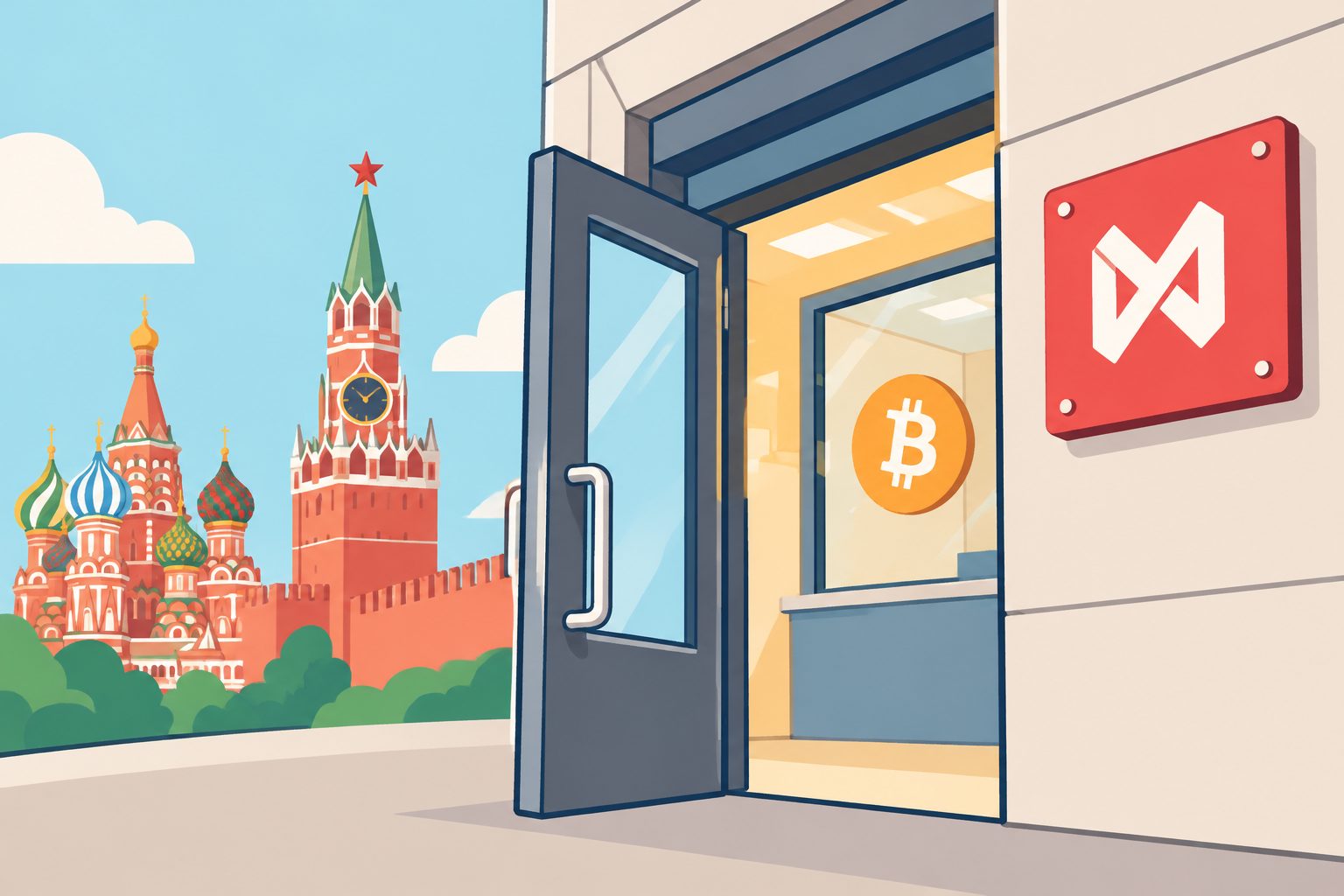
From Nov. 22, Russian exchanges can trade crypto if the central bank has approved their rules. Ordinary investors may spend up to 300,000 rubles a year per intermediary on Bitcoin, Ethereum and USDT. Moscow Exchange plans to begin a pilot on Dec. 1; crypto remains barred for everyday domestic payments.
The retail purchase rules took effect Nov. 17. The cap is based on rubles spent through each intermediary during the calendar year, not the changing value of holdings. Purchases through brokers, asset managers and registered crypto exchange offices count, including deals arranged outside an exchange order book. Qualified investors can buy other tokens without this cap after passing a test and reviewing the risks. The central bank selected Bitcoin, Ethereum and USDT partly because they are heavily traded and have at least five years of price history on foreign exchanges.
Exchanges must register trading firms, monitor orders and completed trades, calculate market prices and report activity to the central bank. The new legal framework also provides for digital depositories to record ownership rights. Crypto cannot be used to pay Russian merchants, though a separate provision allows exporters and importers to use it for cross-border settlements.
Moscow Exchange already offers cash-settled crypto futures; it reported more than 600 billion rubles in turnover by mid-September since contracts began in summer 2025. Those contracts pay out in rubles without delivering crypto, so their turnover does not show how much demand there will be for direct asset trading. The planned pilot is aimed initially at existing qualified trading and clearing participants, with brokers deciding which clients can access it.
The exchange’s technical specification provides for same-day and next-day settlement. The National Clearing Centre’s plan lists five pairs: BTC, ETH and USDT against rubles, plus BTC and USDT against USDX, a settlement currency used by the clearinghouse. Direct BTC/USDT trading is not planned initially, though crypto-to-crypto pairs may be considered in 2027. Participants can place anonymous orders or negotiate with known counterparties; the clearinghouse expects settlement roughly every 30 to 60 minutes. Short selling is initially prohibited, while brokers may offer margin trading under applicable rules.
Trades will be recorded through accounts at a digital depository outside the Moscow Exchange group, without a blockchain transaction for every match. The depository can update ownership records while the underlying coins remain in custody. Moscow Exchange has not named the separate depository or confirmed whether customers can withdraw coins to personal wallets. A large prearranged trade could boost turnover without establishing steady market activity; repeat trades and the ability to transact near quoted prices will be important indicators of liquidity.
Moscow Exchange plans to use the National Clearing Centre, which—like the exchange—was sanctioned by the US Treasury in June 2024. The exchange intends to introduce USDT through a pilot with restricted volumes. Its technical documents identify USDT as an Ethereum token, and Tether has a policy of freezing wallets associated with people or entities on US sanctions lists. However, no freeze tied to the proposed pilot has been verified, and available information does not establish whether Tether has reviewed the arrangement. The exchange has not identified the wallets that would hold the tokens, named their supplier or explained how the issuer’s controls would apply.