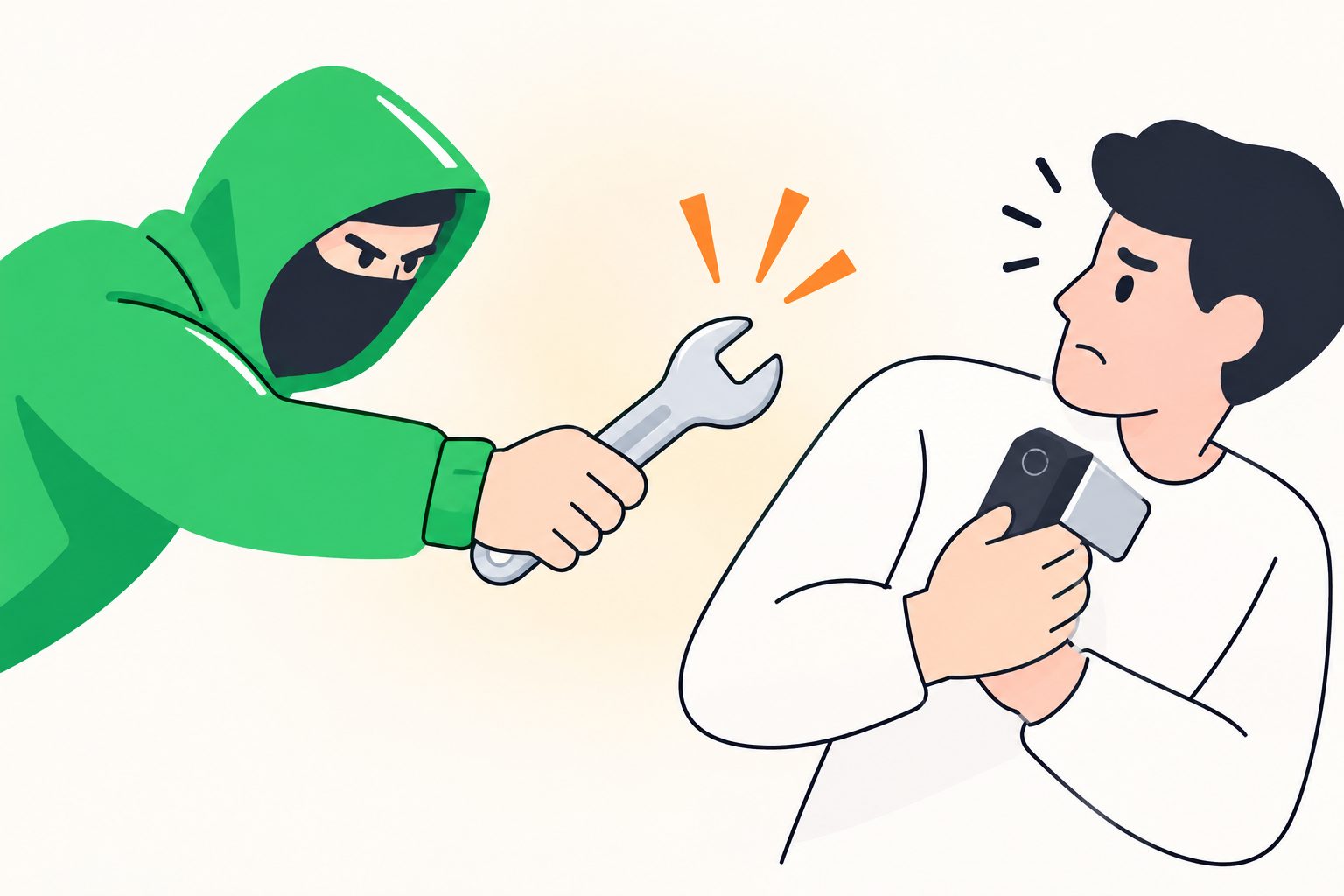
Chainalysis recorded a record $58M successfully taken from crypto holders through physical coercion in 2025 and more than $30M by mid-2026. It counted 46 incidents through late June 2026; attackers received payment in 12. A separate public tally counted 316 press-reported attacks from January 2025 to October 2026, including 77 in France.
The figures cannot be combined: Chainalysis tracks extracted value and incident patterns, while CertiK counts verified public incidents. Both say their totals are incomplete.
CertiK verified 72 incidents in 2025 and 52 in the first half of 2026, up from 39 in the same period of 2025. France accounted for 33 of the 52 incidents. CertiK recorded $124.1M in exposure for that half-year, including ransom demands as well as losses; its 2025 figure of $40.9M is confirmed losses. The trackers classify incidents differently: Chainalysis counted kidnappings as 52% of its 2026 incidents, while CertiK ranked home invasions first. France’s counts in both datasets were below the more than 70 incidents authorities said they had documented by late June. Chainalysis cited the alleged sale of tax-official dossiers and the Waltio data breach as likely contributors to France’s increase.
Information leaks can connect crypto holdings to people and home addresses. A 2020 Ledger breach exposed names, addresses and phone numbers for about 272,000 customers. Keystone said attackers accessed 25,964 buyer records on October 20, 2026, but recovery phrases and private keys were not exposed and no thefts were reported. The Waltio breach disclosed in January 2026 affected about 50,000 users. Chainalysis also identifies social media, conference appearances, linked on-chain activity and insider knowledge as ways victims may be selected. Its data showed attacks against relatives or acquaintances made up about 25–30% of cases by early 2026, compared with near zero in 2021.
CoinPaprika’s count of Jameson Lopp’s public list found 125 kidnappings or hostage-takings, 85 home invasions, 76 street or meeting robberies and 30 other or unclear cases. Home invasions made up 23% of 2025 entries and 32% of 2026 entries through October. France’s 77 entries included 70 kidnappings or home invasions; 22 entries across the full tally named a public profile or a data leak, while 294 did not say whether either was involved. These are press-reported entries, not proof of what caused an attack.
Privacy measures include avoiding public disclosure of holdings and limiting personal details shared with vendors. Jameson Lopp said many victims are lifestyle and luxury influencers who display wealth, and advised meeting in public when a face-to-face trade cannot be avoided. Shipping to a workplace or pickup point, asking how long vendors retain records and keeping relatives informed can also reduce exposure; Keystone shortened its data-retention period from 180 to 90 days after its breach.
A decoy wallet can hold a smaller balance for a coerced handover, but it may fail if an attacker knows about other funds or can trace them on-chain. Lopp’s framework describes decoy balances of $2,000–$5,000; the wallet should fit the holder’s apparent transaction history. As the source puts it, a stock answer such as “there is another wallet” can end the exchange. A duress PIN or passphrase does not prevent an attack, and mistakes under stress can expose funds or lock the owner out.
Multisig can distribute signing keys across locations, while a time-lock can delay a transfer. Zodiac’s Ethereum Delay Modifier commonly queues Safe transactions for one to seven days, but direct signing bypasses that delay. Liana’s Bitcoin recovery paths are for inactivity, loss and inheritance, not spending delays. Custodians and exchanges can add withdrawal limits, approvals or waiting periods, but do not eliminate physical risk if a person can still authorize a transfer.
During an attack, Lopp’s framework prioritizes human safety and advises against resistance that could escalate violence. Once safe, victims should contact emergency services and police. If funds moved, Security Alliance’s free SEAL 911 service can advise on containment and does not ask for payment or a seed phrase. Transaction hashes, timestamps and destination addresses can help investigators; secrets on devices unlocked during the attack should be treated as compromised, with remaining funds moved to a new wallet on clean hardware. Chainalysis says stolen funds may go directly to exchanges, where compliance teams can freeze them, or through bridges and laundering services.