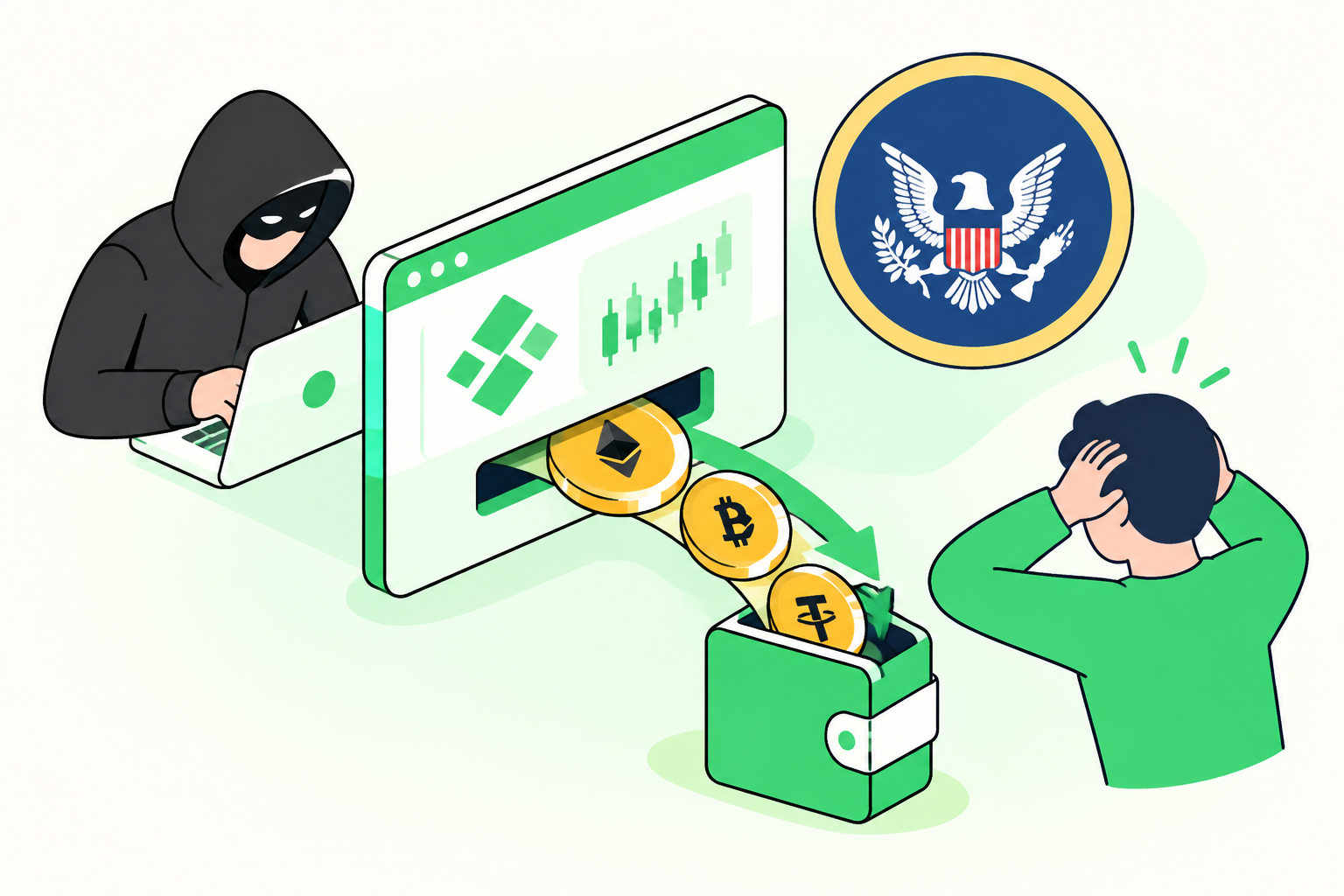
The SEC charged eight Colorado-registered entities, which it says were likely operated from overseas, over an alleged scheme that stole more than $37 million from U.S. investors. According to the complaint, operators used social media and chats to pose as investment advisers, first steering victims toward real U.S. stocks and then pressuring them to deposit money on fake crypto platforms.
The complaint says the supposed advisers and trading platforms were entirely fraudulent, “simply fronts to steal investor money.” To appear legitimate, operators allegedly fabricated SEC certificates and made filings with the SEC, FINRA and FinCEN, directing skeptical investors to those documents as proof of legitimacy.
The scheme allegedly ran from August 2024 through May 2026, using four adviser-and-platform pairs. The perpetrators reportedly abandoned one pair and created another every few months. The entities face allegations of violating federal antifraud provisions; several are also accused of violating the Investment Advisers Act. The SEC is seeking injunctions, disgorgement and civil penalties.
“The SEC continues to seek out and expose fraudulent investment scams that prey on U.S. investors,” said Laura D’Allaird, chief of the agency’s Cyber and Emerging Technologies Unit, who urged the public to report such schemes. The SEC credited regulators in Hong Kong, Singapore, China and Switzerland for their cooperation, reflecting the cross-border nature of the alleged fraud.
The article describes the case as part of a continuing wave of “pig butchering” scams and notes that fake platforms and social-engineering schemes keep costing victims worldwide. It cites Chainalysis and others on how operations often run by organized crime in Southeast Asia have expanded with AI-generated personas and scripts, making romance and investment scams a major category of crypto fraud.