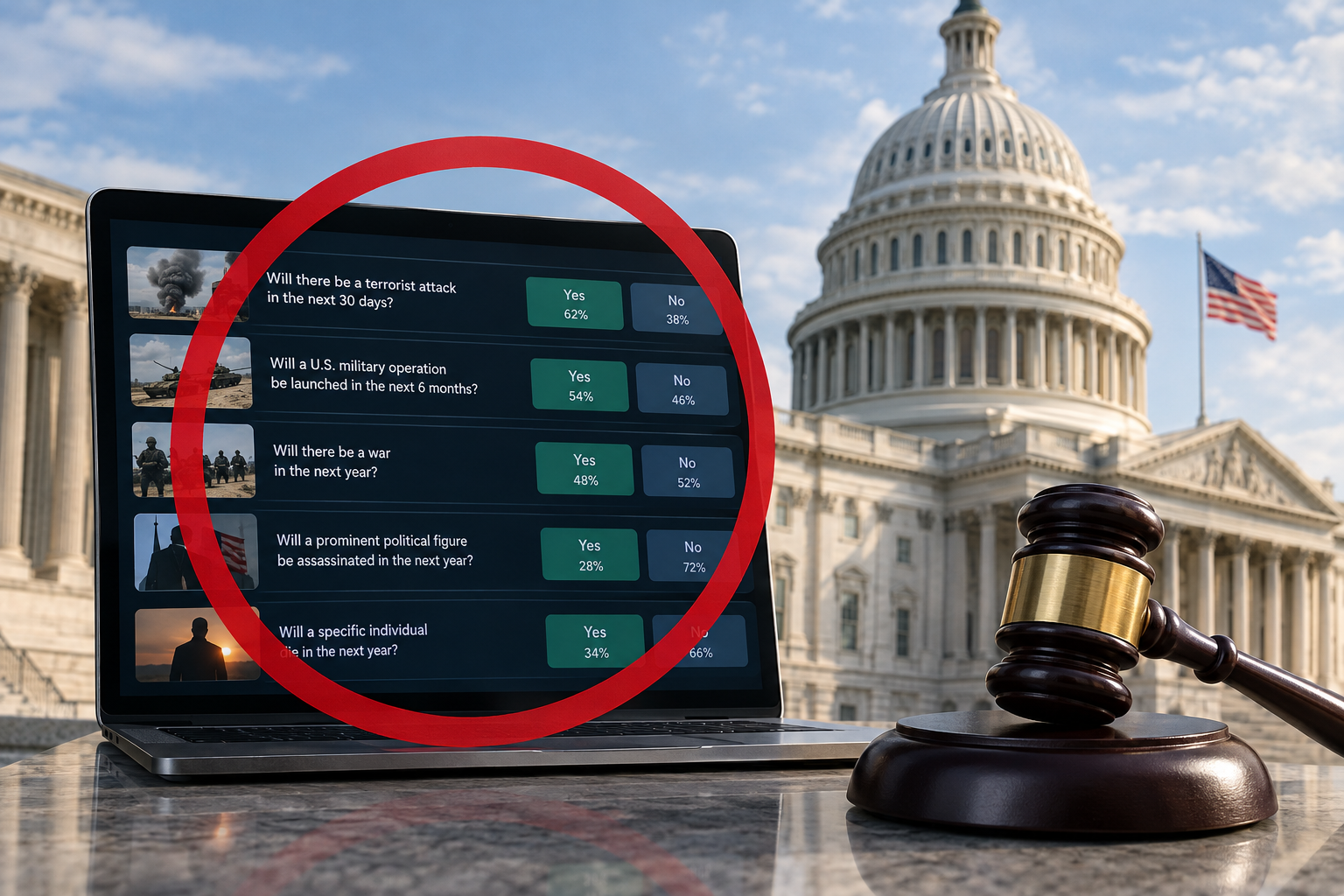
The U.S. Senate passed the DEATH BETS Act by voice vote on November 19, with an amendment. It would bar CFTC-regulated platforms from listing event contracts tied to terrorism, assassination, war or U.S. military operations, as well as contracts expected to resolve mainly on an individual’s death. The bill now goes to the House.
The measure, formally the Discouraging Exploitative Assassination, Tragedy, and Harm Betting in Event Trading Systems Act, was introduced in March by Sen. Adam Schiff (D-CA) and cosponsored by Sen. John Curtis (R-UT). Schiff said: “With this bill, Congress is making it clear that these bets should be illegal,”
The bill would amend the Commodity Exchange Act to prevent CFTC-registered exchanges and clearinghouses from listing or clearing the specified contracts. It also allows the CFTC to extend the restriction by rule to “any similar activity.” Other event contracts covered by existing CFTC rules, including those involving gaming, would not be affected, according to the bill’s text.
Prediction markets such as Kalshi and Polymarket offer trading on real-world outcomes, including elections, sports and geopolitics. Lawmakers have criticized markets on wars and leaders’ fates, arguing that they enable people to profit from tragedy and could reward people with advance knowledge of military plans. Polymarket users have faced accusations of insider trading after earning $2.4 million on Iran-related predictions; the platform withdrew a market on whether a nuclear weapon would be detonated following public backlash. Senate Democrats have also questioned whether people close to President Donald Trump could profit from war-related markets, and a senator alleged White House corruption over predictions tied to the Iran war. Kalshi was sued after declining to pay out on a market related to the death of Iran’s then-Supreme Leader, Ali Khamenei.
In June, the CFTC proposed rules to prohibit markets on outcomes that could result from war or assassination. The proposal addressed, among other examples, vaguely worded bets about when U.S. adversaries would be “out of office,” which Kalshi and Polymarket had used to get around existing restrictions on war-related contracts. War-related markets have also appeared on Myriad, operated by Decrypt parent company DASTAN, including a market on whether U.S. troops would enter Iran.
The legislation comes amid legal disputes between prediction markets and states over whether some contracts constitute unlicensed gambling. New York has sued Coinbase and Gemini over their prediction markets. The CFTC, which sued three states in April to defend its authority over these markets, has since brought cases against 12 states, most recently Louisiana.