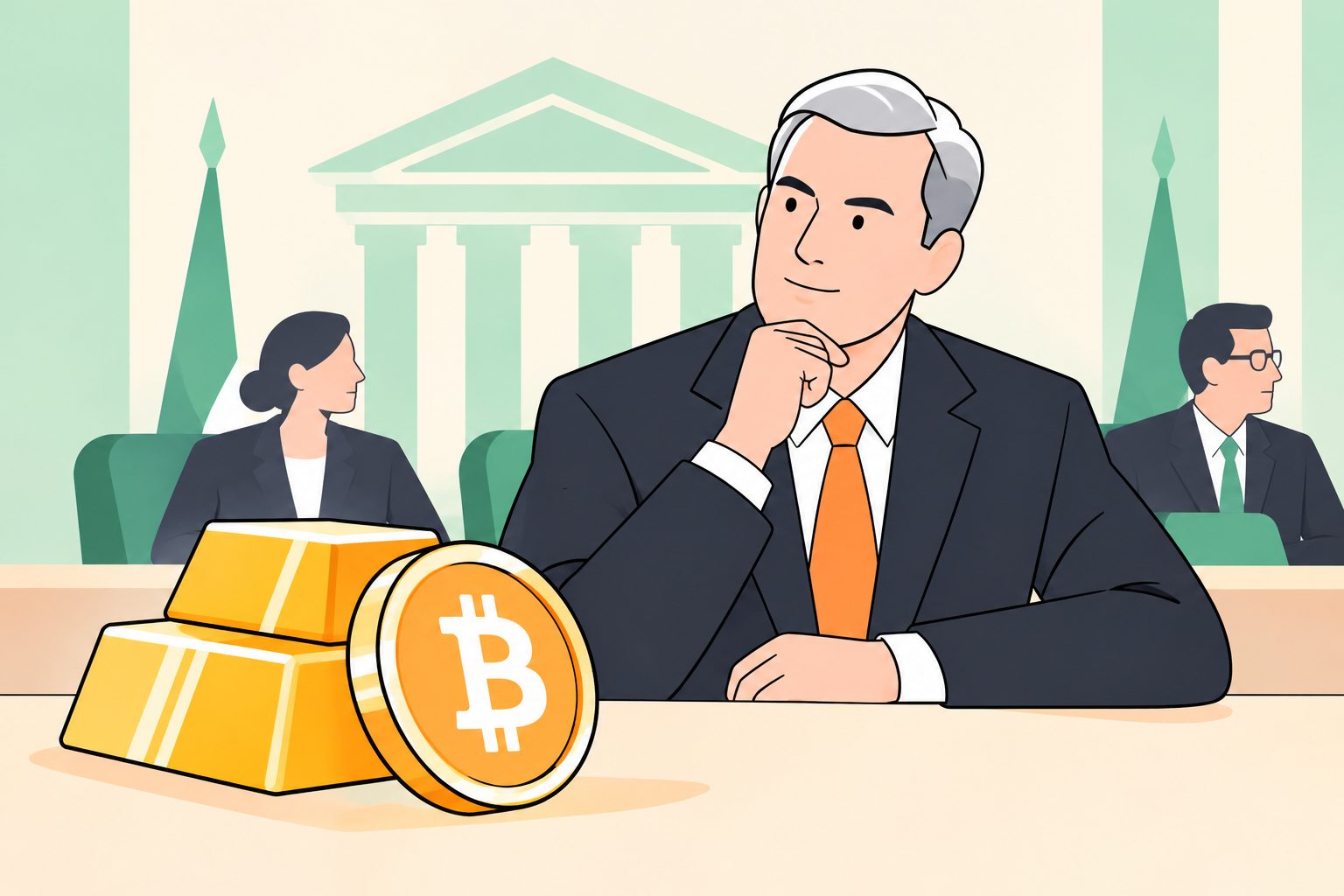
OMFIF’s 2026 survey of 74 central banks found that 92% do not invest in digital assets, 7% are considering them and 1% already invest. Its report says geopolitical risks are prompting central banks to focus on direct access to assets, helping explain their preference for physical gold over tokenized gold.
Since Russia’s reserves were frozen in 2022, central banks have paid greater attention to whether assets held abroad can actually be accessed. Gold held inside Russia was not frozen. Steven Feldman, chief executive of Gold Bullion International, said: “The frozen reserves have not lost their value, they have lost their utility,” adding that reserves are “also judged by who can say no.”
An unnamed European central bank described concentrating much of its gold in London as a risk and discussed moving some elsewhere in Europe; another said it keeps about half its gold at home. One central bank said the dollar is “now within the geopolitical risk framework rather than being a neutral asset,” while another resumed gold purchases “following political enquiries.”
Some gold relocations are public. In September, the Dutch central bank cited “increasing geopolitical unrest” as it rearranged about 86 tonnes: it sold roughly 59 tonnes in New York and bought gold in London, moved more than 27 tonnes from the U.S. and Canada to its vault in Zeist, and sent a similar amount from Zeist to London. Its domestic share stayed near 31%. The Banque de France replaced 129 tonnes held in New York with gold stored in Paris. Germany’s Bundesbank holds 1,236 tonnes at the New York Fed and says it trusts the Fed’s reliability. In OMFIF’s 2024 report, a prominent European central banker said: “gold is one of them along with commodities and crypto assets like bitcoin.”
No central bank in OMFIF’s working group reported using or holding tokenized gold. One European central bank said gold “must be an asset that can be owned and accessed directly,” warning that tokenized gold relies on issuers and operators that could fail or block access. Another said physical gold could remain available if market infrastructure failed: “would remain usable without the London fixing, counterparties, or online infrastructure.” Bitcoin offers self-custody too, but depends on online infrastructure and carries cybersecurity risks; hundreds of millions of dollars in bitcoin were stolen from self-custodial wallets this year. Multisig can mitigate some risks, though the report notes that physical gold can also be stolen or seized. Historical examples include the theft of about 3 tonnes in the 1983 Brink’s-Mat raid and Vichy France’s 1940 transfer to Nazi Germany of 198 tonnes of Belgian gold entrusted to the Banque de France.
The Czech National Bank bought a $1 million test portfolio of bitcoin, a dollar stablecoin and a tokenized deposit in November 2025, outside its official reserves. OMFIF’s 2025 survey also found 7% of 75 banks considering digital assets, but it is unknown whether the Czech bank was among them or whether another bank has since joined. In March 2026, Kazakhstan’s central bank said it would create a portfolio of up to $350 million in crypto companies and other instruments offering digital-asset exposure, funded from gold and part of its foreign reserves. The share of banks expecting to raise unspecified digital-asset allocations over the next decade was 13%, up from 10% a year earlier.
The World Gold Council said central banks added 321 tonnes in the third quarter of 2026, up 42% year over year, bringing nine-month purchases to 675 tonnes, 6% above the same period in 2025. In the prior year, bar-and-coin demand reached 1,374 tonnes, worth $154 billion, while central banks added 863 tonnes. In the third quarter of 2026, central bank purchases of 321 tonnes exceeded bar-and-coin demand of 268 tonnes. Gold Republic’s Alexej Jordanov said private savers had bought more gold in bars and coins than central banks added to reserves every year since 2010, purchasing about twice as much overall. “Gradually, one gram at a time, they are becoming their own central banks,” he wrote; a bar in an owner’s name “leaves no one between the owner and the metal.”
Matthew Ferranti of the University of Cincinnati’s Cryptoeconomics Lab argued in a 2025 peer-reviewed paper that gold and bitcoin can insure central banks against sanctions, but gold does so only when kept in the bank’s own vault. In a January article, he found bitcoin’s price rose as the odds of Jerome Powell’s removal as Fed chair increased, suggesting it may also hedge against a loss of Federal Reserve independence. Both assets fell during the 2026 Strait of Hormuz crisis, initially behaving like risk assets, though bitcoin later outperformed gold for weeks. Unlike gold bars, bitcoin can also be used for direct payments.